

By PC Hardware News Desk
Published: October 2025
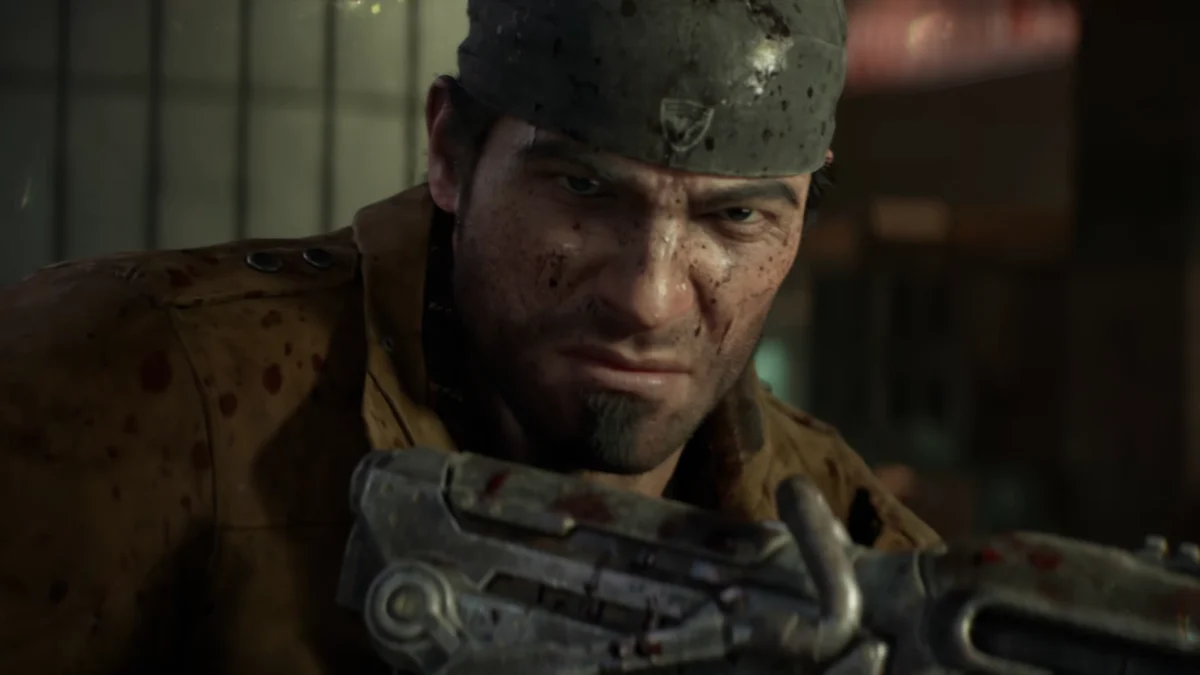
As the gaming community counts down the days to the October 6 release of Gears of War: E-Day—with early access periods rolling out just prior—developer The Coalition has released the comprehensive and expanded PC system requirements. While the studio has ensured that the game scales gracefully to accommodate mid-range setups on more modest settings, the upper echelons of visual fidelity demand absolute heavy-hitting hardware. Most notably, the developers have drawn a definitive line in the sand regarding ray tracing support: non-ray-tracing-capable GPUs need not apply.
With deep support for modern upscaling technologies and heavily integrated next-generation lighting techniques, Gears of War: E-Day aims to showcase the absolute pinnacle of modern graphical capabilities. However, players looking to experience Marcus Fenix’s harrowing origin story on PC will need to carefully audit their rigs to ensure compatibility, particularly when it comes to storage space, ray-tracing hardware, and processing power.
Main Facts: What You Need to Know
The definitive system specifications for Gears of War: E-Day outline three core performance tiers: Minimum (1080p at 60 fps on Medium settings), Recommended (1440p at 60+ fps on High settings), and Ultra (4K at 60+ fps on Ultra settings).
The most striking takeaway from The Coalition’s hardware breakdown is the absolute hardware ray-tracing mandate. The studio has explicitly stated that graphics cards lacking dedicated hardware ray-tracing support are entirely unsupported. This is because Gears of War: E-Day relies fundamentally on ray-traced reflections, shadows, and global illumination to build its atmospheric, subterranean-invaded world.
Furthermore, storage demands are strict. Players must carve out a hefty 115 GB of storage space, and this must be housed on a Solid State Drive (SSD)—traditional mechanical hard drives will no longer cut it for modern AAA blockbusters of this scale.
Chronology of Hardware Announcements: From Early Teasers to Final Specs
To understand where Gears of War: E-Day sits in the current hardware landscape, it helps to look at how developer communication has evolved.
- June 2025: Initial hardware projections surfaced during summer gaming showcases, indicating that the game would lean heavily on modern architectures and that older Pascal-era cards (such as the Nvidia GTX 10-series) would likely struggle or fail to meet baseline requirements. At this stage, baseline GPU expectations coalesced around the RTX 2060 and RX 6600 lines.
- Late September 2025: The Coalition finalized its optimization targets, factoring in the latest generation of upscaling algorithms and consumer GPUs. The studio confirmed that Gears of War: E-Day would launch with native support for Nvidia DLSS 4.5, AMD FSR 4, and Intel XeSS 3.0.
- Early October 2025 (Present): The expanded, official tier-by-tier system requirements matrix was published, detailing exact GPU, CPU, VRAM, and RAM pairings for Minimum, Recommended, and Ultra configurations just days ahead of the game’s official October 6 launch.
Supporting Data: The Official PC Requirements Matrix
The Coalition’s detailed specifications provide a clear roadmap for what PC builders will need under the hood to achieve their desired resolutions and frame rates.
| Specification | Minimum (1080p, 60 FPS, Medium) | Recommended (1440p, 60+ FPS, High) | Ultra (4K, 60+ FPS, Ultra) |
|---|---|---|---|
| Graphics Preset | Medium | High | Ultra |
| Performance Target | 1080p / 60 FPS (with upscaling) | 1440p / 60+ FPS (with upscaling) | 4K / 60+ FPS (with upscaling) |
| Graphics Card (GPU) | Nvidia GeForce RTX 5050 / RTX 2060 AMD Radeon RX 6600 / RX 9060 |
Nvidia GeForce RTX 5060 / RTX 3060 Ti AMD Radeon RX 6700 XT / RX 9060 XT |
Nvidia GeForce RTX 5070 Ti AMD Radeon RX 7900 XT |
| Processor (CPU) | AMD Ryzen 5 2600X Intel Core i7-6850K / i5-10400 |
AMD Ryzen 5 5600 Intel Core i5-11600K |
AMD Ryzen 7 7800X3D Intel Core i7-14700K |
| VRAM Required | 6 GB | 8 GB | 12 GB |
| System RAM | 12 GB | 16 GB | 16 GB |
| Storage Space | 115 GB (SSD Required) | 115 GB (SSD Required) | 115 GB (SSD Required) |
Official Responses and Developer Insights
The Coalition has been vocal about designing Gears of War: E-Day to push hardware boundaries while remaining accessible through intelligent scaling. According to technical leads at the studio, the decision to make ray-tracing hardware a non-negotiable prerequisite was driven by the artistic vision for the game’s lighting and atmosphere.
Emergence Day is depicted as a catastrophic, sudden event that plunges familiar cities into darkness, dust, and chaotic destruction. Traditional baked lighting solutions could not deliver the dynamic fidelity, real-time shadow casting, and complex surface reflections required to make the Locust Horde’s surprise invasion feel genuinely claustrophobic and terrifying.
"A hardware ray-tracing capable graphics card is required. Graphics cards without dedicated hardware ray tracing support are not supported," the studio reiterated in official documentation. By leaning heavily into modern features like Nvidia DLSS 4.5, AMD FSR 4, and Intel XeSS 3.0, the developers have ensured that even if players are running hardware closer to the minimum or recommended brackets, AI-assisted upscaling can bridge the gap to maintain a locked 60 frames per second.
When examining the CPU side of the equation, the studio’s requirements scale broadly. Entry-level systems can get away with older six-core processors like the AMD Ryzen 5 2600X or Intel Core i5-10400. However, pushing the game to its absolute limit at 4K Ultra demands significantly more computing muscle. The Coalition explicitly recommends chips equipped with large caches and high core counts, specifically calling out the gaming powerhouse AMD Ryzen 7 7800X3D and the robust Intel Core i7-14700K. Newer Arrow Lake processors are also expected to handle the load comfortably, despite marginal architectural performance variances in specific titles.
Implications for PC Gamers and the Hardware Market
The release of these system requirements carries several notable implications for both the PC gaming community and the wider hardware ecosystem.
1. The Final Nail in the Coffin for Legacy GPUs
For years, veteran graphics cards like the Nvidia GeForce GTX 1060 and GTX 1080 served as legendary workhorses, holding their ground in Steam hardware surveys long past their expected prime. However, Gears of War: E-Day represents a hard market shift. Because these legacy architectures completely lack dedicated hardware ray-tracing cores, owners of pre-RTX cards are formally locked out of the experience unless they upgrade. This trend signals that game developers are increasingly comfortable dropping support for non-RTX hardware entirely, accelerating the phasing out of older gaming PCs.
2. The Rise of Mandatory Upscaling
While running native resolutions used to be the gold standard of PC optimization, the inclusion of DLSS 4.5, FSR 4, and XeSS 3.0 as baseline assumptions in the performance tables shows how deeply integrated upscaling has become. Players targeting 1080p Medium or 1440p High will rely heavily on these tools to maintain smooth 60 fps gameplay without sacrificing visual integrity.
3. Storage Realities and SSD Standardization
Requiring 115 GB of fast SSD storage is no longer surprising in the modern era of massive textures and seamless streaming, but it serves as another reminder that traditional spinning hard drives are officially obsolete for modern gaming. Players with constrained SSD capacities will need to carefully manage their installations before October 6.
Looking Ahead
As Gears of War: E-Day prepares to launch on October 6, all eyes will be on how well these optimizations hold up in the wild. For players equipped with modern ray-tracing GPUs, fast multi-core CPUs, and ample SSD space, the game promises to be a stunning technical showcase. For those with aging systems, it may be time to eye up hardware upgrades before the Locust emerge from the earth.

