

By the Gaming Desk Features Team
It is a tale as old as modern digital entertainment itself: a player boots up a massive, hundred-hour role-playing game, determined to follow the critical path, save the world from impending doom, and see the credits roll. They navigate through the opening cutscenes, manage their inventory, and step out into an expansive open world. Then, they encounter a nondescript NPC sitting at a tavern table, holding a deck of cards or offering a wager on a digital dice roll.
Forty hours later, the world is still ending, the main villain is still twirling their mustache in anticipation, and the player has successfully cornered the regional economy through virtual card tournaments or underground racing leagues.
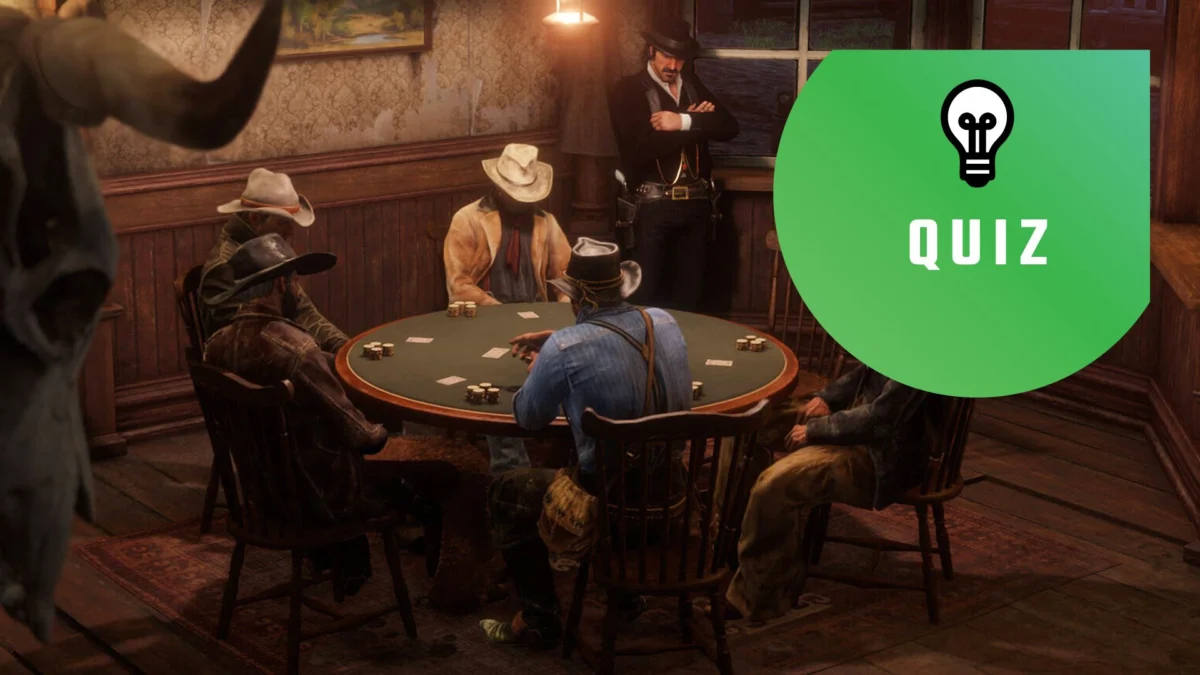
Welcome to the captivating, often productivity-destroying world of the "game-within-a-game"—the deeply integrated minigame that manages to overshadow the very titles it was designed to support. This week, PC Gamer is putting player expertise to the ultimate test with a fiendish new trivia challenge dedicated entirely to these digital rabbit holes, asking dedicated fans a simple yet punishing question: Can you identify the source game based solely on a screenshot of its internal pastime?
Main Facts: The Anatomy of the Ultimate Distraction
The phenomenon of embedding fully realized, standalone-quality games inside larger software titles is a masterclass in game design pacing. Unlike standalone party game collections—such as the perennial Mario Party series, where mini-games are the entire structural point—a game-within-a-game acts as a structural detour.
These side-activities typically fall into a few distinct categories:
- The Collectible Card Game (CCG): Deeply strategic, lore-infused economies where players hunt down rare cards across the game world to build competitive decks.
- Virtual Analogues of Real-World Gambling: Poker, blackjack, and dice games that utilize in-game currency to simulate high-stakes thrills without real financial risk.
- Physics-Based Oddities: Fishing systems, hacking puzzles, or farming simulations that shift the core gameplay loop entirely.
When executed with precision, these features do not feel like mere filler. Instead, they elevate the atmosphere of the primary game, grounding the player in a living, breathing virtual ecosystem where the inhabitants have hobbies, pastimes, and vices of their own.
Chronology: A Brief History of In-Game Diversions
To understand why players are willing to sacrifice entire weekends to virtual pastimes, it is helpful to look back at how these features evolved over the decades.
The Early Days and Arcade Roots (1980s–1990s)
In the early eras of gaming, technical limitations meant that interactive elements within larger games were often simplistic. Early RPGs featured basic tavern games or simple text-based puzzles. However, as hardware advanced into the 32-bit and 64-bit eras, developers gained the overhead required to render more complex systems.
Classics like Final Fantasy VII (1997) introduced the Gold Saucer, a sprawling amusement park area packed with distinct activities, from chocobo racing and breeding to fighting arenas and 3D arcade cabinets. It proved that players relished a change of pace from saving the planet.
The Golden Age of Tactical Side-Activities (Late 1990s–2000s)
The paradigm shifted permanently with the release of Final Fantasy VIII (1999) and its introduction of Triple Triad. This deceptively simple 3×3 grid card game featured elemental rules, card-flipping mechanics, and a trading system that allowed players to break the game’s core economy if they mastered it early. Triple Triad was so universally beloved that it eventually found its way into Square Enix’s massively multiplayer online role-playing game, Final Fantasy XIV, cementing its legacy as a multi-generational time sink.
Around the same time, open-world titles began integrating realistic pastimes. Rockstar Games’ Grand Theft Auto: San Andreas (2004) allowed players to step away from drive-bys and turf wars to play a complete game of pool, engage in basketball shootouts, or hit the casino floors for blackjack and video poker.
The Modern Masterclasses in Obsession (2010s–Present)
The pinnacle of the genre arrived in the mid-2010s with The Witcher 3: Wild Hunt (2015). Developer CD Projekt Red introduced Gwent, a tactical card game played with armies representing different factions of the continent. Gwent was so masterfully woven into the fabric of the game—complete with dedicated side-quests, tournaments, and rare cards held by eccentric merchants and monarchs—that countless players famously ignored the main storyline involving Ciri and the Wild Hunt for dozens of hours just to complete their card collections. The demand was so overwhelming that Gwent eventually spawned its own standalone, highly successful competitive card game.
Similarly, titles like Yakuza (now Like a Dragon) transformed side-activities into an art form, treating arcade classics, cabaret club management, and mahjong with the same narrative weight and cinematic presentation as the main crime dramas.
Supporting Data: The Psychology of the Sidequest
Why do players abandon epic quests to chase virtual high scores or rare trading cards? Behavioral psychologists and game designers point to several key mechanisms:
- The Hook of Mastery: Main campaigns often feature escalating challenges that can induce cognitive fatigue. A well-designed minigame offers a fresh learning curve with rapid, clear feedback loops, allowing the player to experience a quick burst of mastery and competence.
- Autonomous Choice: Open-world and narrative RPGs guide the player along a predetermined path. Engaging in an internal game provides a sense of absolute autonomy; the player chooses when to play, whom to challenge, and what stakes to set.
- Loot Economy Integration: When winning a match yields tangible rewards that improve the player’s performance in the main campaign—such as rare weapons, armor, or currency—the side-activity transforms from a distraction into a strategic necessity.
According to informal engagement metrics across gaming communities, titles featuring robust in-game pastimes consistently report higher average playtime per user, with a significant percentage of total hours logged dedicated entirely to non-essential activities.
Official Responses and Developer Perspectives
Game developers have frequently spoken out about the phenomenon of their secondary systems eclipsing their primary narratives—sometimes with affectionate dismay.
In retrospective interviews discussing the development of The Witcher 3, members of the CD Projekt Red design team noted that Gwent was originally conceived as a simple tavern diversion to break up the grim atmosphere of monster hunting. They never anticipated that it would become a cultural touchstone overshadowing the main narrative beats for a large portion of the player base.
"When you build a world, you want the people living in it to feel authentic," one senior designer noted in a past post-mortem discussion. "People don’t just fight monsters and run from kings; they gamble, they play games, they waste time at the tavern. When those systems click with the audience, the virtual world stops feeling like a set piece and starts feeling like a place they actually inhabit."
Similarly, directors behind the Yakuza series have openly embraced the chaos, dedicating massive development budgets to ensuring that minigames like pocket circuit racing and real estate management are built with the depth and polish of full indie releases.
Implications: The Future of In-Game Diversions
As gaming technology advances into new frontiers with hyper-realistic graphics and expansive virtual worlds, the role of the game-within-a-game is poised to expand even further.
With the rise of persistent online spaces, virtual economies, and cross-platform integration, modern developers realize that player retention relies heavily on variety. Whether it is a fully playable arcade cabinet found inside a futuristic cyberpunk sprawl or an intricate deck-building card game set in a medieval fantasy realm, these features have evolved from cute Easter eggs into essential pillars of modern game design.
Take the Challenge
For those confident in their encyclopedic knowledge of digital history, the current PC Gamer quiz offers a stark test. Armed with a 10-minute timer and a series of meticulously chosen screenshots showcasing obscure tables, neon-lit arcades, and card boards from across gaming history, players must prove whether they are true connoisseurs of the craft—or if they spent too much time actually playing the games instead of finishing them.
Head over to the official quiz portal, put your memory to the test, and find out if your virtual gaming credentials hold up against the ultimate collection of time-wasting masterpieces.

