

In the rapidly evolving landscape of social media, the concept of a "finished" post has long been a point of contention for creators. Once a video is uploaded, the audio track—often a defining element of the mood, pacing, and viral potential—has traditionally been set in stone. However, Meta is looking to disrupt this rigid architecture. With the global rollout of its new "Replace Audio" feature, Instagram is granting creators the ability to swap out the background music on existing video posts without sacrificing the accumulated metadata that powers a post’s performance.
This move signals a broader strategic pivot for Instagram. By allowing users to retroactively refresh their content, the platform is moving away from the "snapshot" model of social media and toward a more fluid, dynamic ecosystem where content is intended to grow and evolve alongside the creator.
The Mechanics: How ‘Replace Audio’ Works
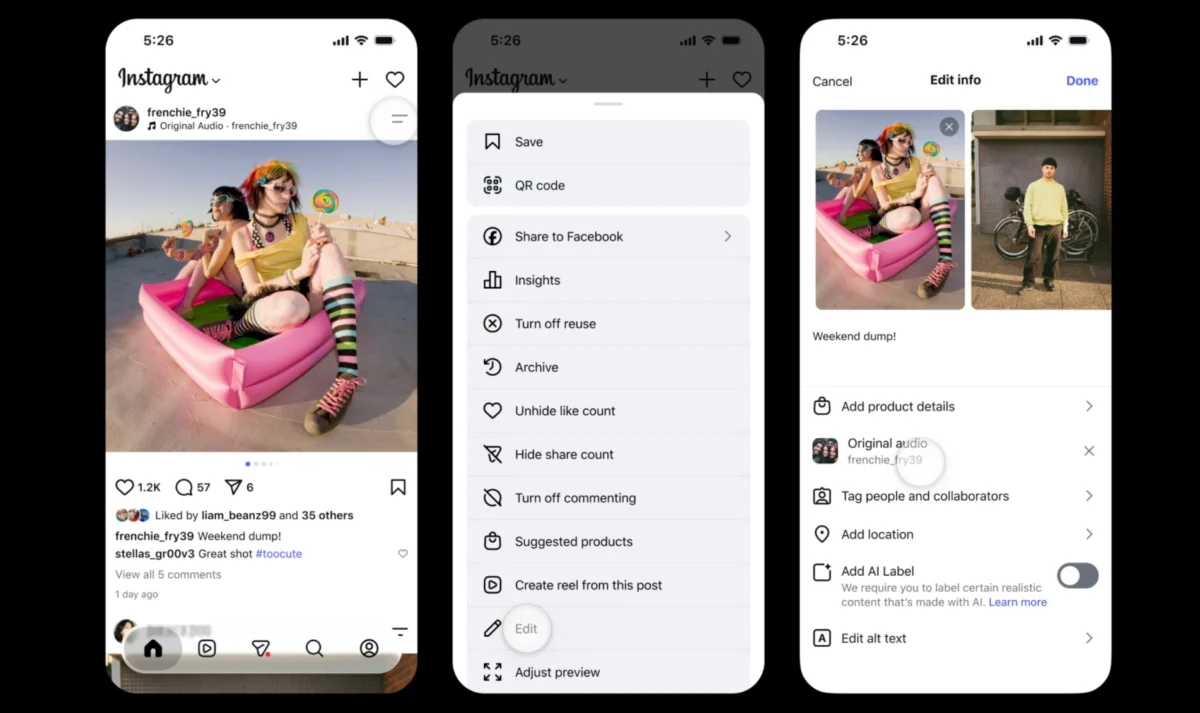
The functionality of Replace Audio is deceptively simple but technically significant. Users can now navigate to their existing video uploads, select the edit menu, and swap the original audio track for a new selection from Instagram’s extensive music library.
Crucially, the feature is designed to be non-destructive. Unlike previous methods—which would have required a user to delete a post and re-upload it, thereby resetting the view count, comment section, and algorithmic standing—Replace Audio preserves all historical engagement metrics. Likes, shares, saves, and view counts remain attached to the post as if the original audio had never been changed. This ensures that a creator’s past work remains a portfolio of their reach, even as the "vibe" of the content is updated to reflect current trends.
A New Era of Content Lifecycle Management
To understand why Instagram is investing in this capability, one must look at the historical constraints of social media platforms. For years, creators have been forced to grapple with "content obsolescence." A video featuring a song that was trending in 2019 can feel jarring or "cringey" when viewed in 2024. Until now, the only way to modernize that content was to delete it, essentially destroying the history of that post’s success.
The Shift from Static to Dynamic
Jimmy O’Keefe, Instagram’s Head of Creator Product Marketing, has framed this as a philosophy of empowerment. According to O’Keefe, creators should not be "locked into every decision they made at the moment they hit publish." By allowing users to reorder their grids, update captions, and now swap audio, Instagram is effectively turning the user profile into a living, breathing digital space that can be curated to reflect the creator’s present-day identity.
Contrasting Approaches: Copyright vs. Creativity
It is vital to distinguish Instagram’s move from similar tools released by competitors. In July 2024, YouTube introduced an "Erase Song" tool. While functionally similar—in that it allows for the modification of audio—the intent was purely defensive. YouTube’s tool was designed to help creators navigate the treacherous waters of copyright strikes and content ID claims. It is a utility for compliance, not necessarily for artistic iteration.
Instagram’s Replace Audio, by contrast, is an offensive play. It is a feature designed for creative agency. While it may occasionally help with rights issues, the primary marketing push behind it is to encourage creators to keep their feeds "current." By enabling these swaps, Instagram is betting that creators will be more likely to maintain older content, keeping high-quality, high-engagement videos circulating in the feed rather than letting them die in the archives of a creator’s profile.
The Role of the "Music Superfan"
The decision to focus on audio-swapping is backed by substantial data. Earlier this year, a comprehensive study conducted by Luminate Data shed light on the unique demographic of Instagram users: the "Music Superfan."
The data suggests that Instagram holds a distinct advantage over competitors like TikTok and YouTube in the realm of music-driven engagement. Superfans on Instagram are not just passive listeners; they are active participants who engage with the music through comments, shares, and the creation of their own derivative content.
This behavior has been so pronounced that Meta has begun integrating these insights into its advertising ecosystem. By connecting brands to cultural moments—such as live concerts or trending song releases—Meta is leveraging the "music-first" nature of the platform to drive higher conversion rates. By allowing users to swap audio, Instagram is essentially keeping its library of content "fresh" and aligned with the current, fast-moving musical zeitgeist, which in turn feeds the ecosystem that these superfans inhabit.
Implications for Creators: Is There an Algorithmic Payoff?
The most pressing question for the creator economy is whether replacing audio will result in a "re-indexing" of the post by the algorithm.
In his comments to The Verge, Jimmy O’Keefe was explicit: the tool is not intended to be a "growth hack." Creators should not expect an automatic surge in views simply because they swapped a track from 2015 to a 2024 chart-topper. However, skepticism remains healthy in the creator community. Given Instagram’s history of rewarding users who adopt new tools, many creators are already testing the feature to see if the increased relevance of the audio translates into better performance in the feed.
Even without a direct algorithmic boost, there is a clear "soft" benefit to the feature:
- Re-engagement: Updating a video with a current song may prompt followers to re-watch and re-share, as the video feels more relevant to the present day.
- Brand Alignment: For creators who partner with brands, the ability to ensure that the music in a post aligns with current campaign goals is a significant advantage.
- Portfolio Curation: Creators can now ensure their "greatest hits" don’t become dated, keeping their overall aesthetic cohesive.
Chronology of Innovation
- Early 2024: YouTube releases the "Erase Song" tool to mitigate copyright strikes, setting the standard for audio-editing utilities.
- March 2026: Meta launches new ad products at its NewFronts presentation, focusing on cultural moments and music-driven engagement.
- April 2026: Luminate Data study confirms that Instagram leads the industry in music "superfan" engagement.
- Late 2026: Instagram officially rolls out "Replace Audio" globally, allowing users to swap music while retaining engagement metrics.
Strategic Outlook: What’s Next?
Instagram’s pivot toward content malleability is likely just the beginning. If the platform continues to favor tools that allow for post-publication editing, we may see further innovations in this space. For example, will we see the ability to re-trim video lengths, update thumbnail images, or even swap out specific frames of a video without losing data?
The broader implication here is a challenge to the traditional social media paradigm where "the archive" is a dead zone. By providing the tools to keep old content relevant, Meta is trying to solve the problem of the "infinite scroll." If users are constantly looking at new content, the old content is wasted. If that old content can be updated to feel new, the platform increases the total value of its historical data.
Conclusion: A Tool for the Modern Creator
The "Replace Audio" tool is a subtle, yet powerful, acknowledgment that the digital landscape is not static. For the professional creator, it is a low-stakes, high-reward feature. It provides a path to refresh a back catalog without the fear of damaging the "social proof" that established the video’s success in the first place.
While it is not a magic bullet for viral success, it is a meaningful step toward a more flexible social media environment. As creators continue to experiment with this feature, the true test will be whether it succeeds in making the Instagram feed feel more vibrant and current, or if it simply acts as a niche tool for the nostalgic. Either way, it signals that Instagram is listening to its power users—and that the era of the permanent, unchangeable post is officially coming to an end.

