


Since its debut in March, Nvidia’s DLSS 5 has ignited a fierce debate within the gaming industry. What was initially hailed as the next frontier in AI-driven graphical upscaling has, for many developers and enthusiasts, sparked concerns about the loss of creative agency and the potential for "AI-washing" in modern game design. Following its unveiling, the industry was met with a chorus of skepticism—critics labeled it a glorified, real-time "yassification" filter that risked homogenizing the unique visual identity of individual titles.
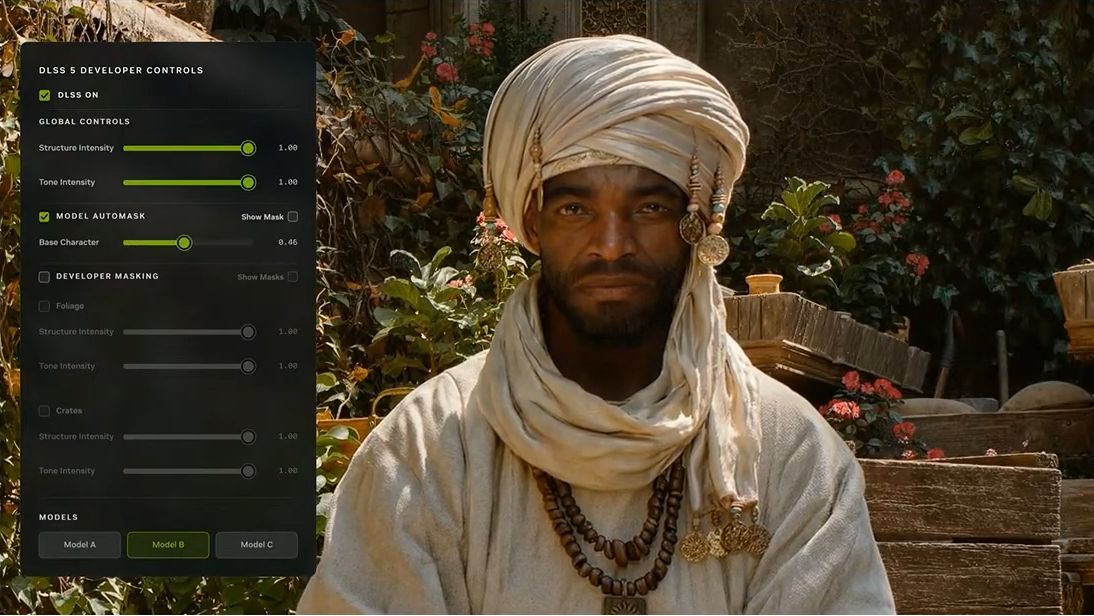
At SIGGRAPH 2026, Nvidia sought to quell these concerns, providing a more granular look at how the technology functions and, perhaps more importantly, how developers can exercise control over its output. As the industry looks toward a fall release, the conversation has shifted from the fear of an automated "AI-over-everything" approach to the practical reality of how these two new control sliders—Structural Intensity and Tone Intensity—will shape the future of virtual visuals.
The Genesis of the Controversy
The skepticism surrounding DLSS 5 is rooted in its technical architecture. Unlike previous iterations of Deep Learning Super Sampling, which focused primarily on spatial and temporal reconstruction, DLSS 5 operates on a model that relies heavily on 2D frame data and motion vectors. When the technology was first revealed, developers expressed alarm that the AI might be "guessing" details that weren’t inherently present in the render, effectively applying a post-process filter that could overwrite the artistic intent of a scene.
Nvidia’s confirmation that the system does not "peek ahead" into future frames—relying instead on the immediate input of current geometry and motion vectors—validated the concerns of those who feared the tech was merely a high-end AI filter. For purists, the idea of an AI model "uplifting" an image—or, as some critics phrased it, "slop-ifying" the frame—represented a dangerous departure from traditional rasterization and ray-tracing techniques where every pixel is a deliberate choice made by the developer.
Chronology: From Backlash to Clarification
- March 2026: Nvidia announces DLSS 5, sparking immediate community and developer backlash regarding its "AI filter" nature.
- Spring 2026: Technical breakdowns emerge, revealing the technology’s reliance on 2D frames and motion vectors, leading to intense debates on forums and social media.
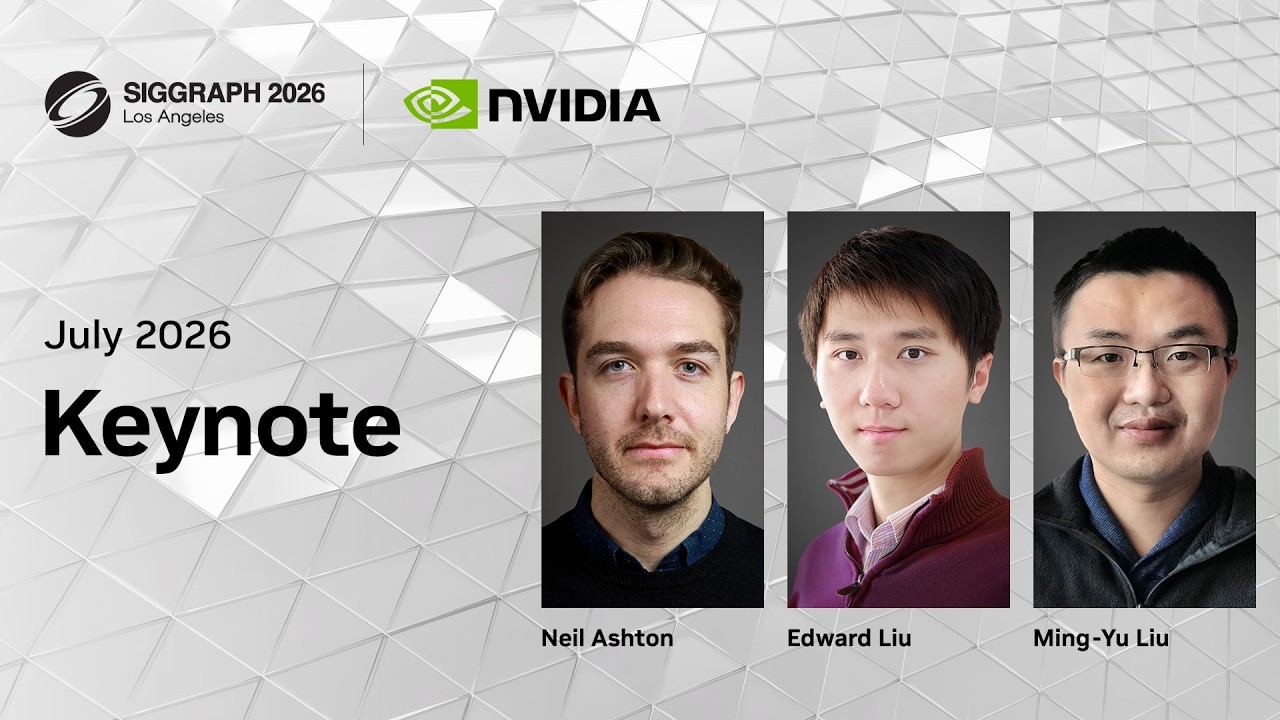
- August 2026 (SIGGRAPH): Nvidia executives and creative staff take the stage to address the "black box" nature of DLSS 5, introducing the two primary control sliders for developers.
- Fall 2026 (Upcoming): Scheduled official launch of DLSS 5 for consumer hardware.
Understanding the Controls: Structural vs. Tone Intensity
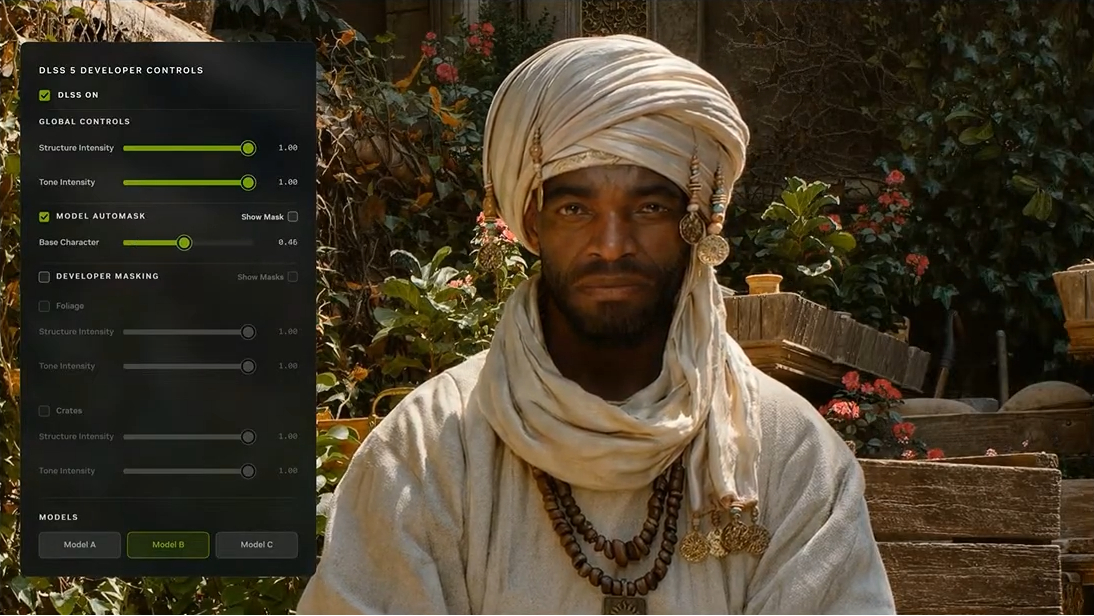
At the heart of Nvidia’s presentation at SIGGRAPH 2026 were the two controls intended to give developers back the reins. It is a common misconception that these sliders alter the underlying geometry of a game; Nvidia has been quick to clarify that the base 3D scene remains untouched. Instead, these sliders modulate how the AI model interprets and enhances the scene’s high-frequency and low-frequency details.
Structural Intensity
The "Structural Intensity" slider is perhaps the most significant. It focuses on the modulation of high-frequency detail. This includes the nuanced behavior of ambient occlusion, subsurface scattering (the way light penetrates translucent surfaces like skin or wax), and complex reflections. By adjusting this slider, developers can determine how aggressively the AI injects detail into these areas. The goal is to provide a "realistic" uplift without the AI hallucinating geometry that isn’t intended to be there.
Tone Intensity
The "Tone Intensity" slider addresses the low-frequency components of the image—specifically lighting, color grading, and overall atmospheric mood. While Structural Intensity handles the "tactile" feel of the scene, Tone Intensity ensures that the lighting models designed by the developers are preserved rather than flattened by the AI.
The Case for AI-Assisted Rendering
To understand why Nvidia is pushing this direction, one must consider the sheer cost of modern rendering. A game developer at the SIGGRAPH keynote, referred to as ‘Gaff’, noted that certain visual elements—specifically complex subsurface scattering—are prohibitively expensive to calculate in real-time using traditional rendering pipelines.
By offloading the generation of these specific details to the DLSS 5 AI, developers can achieve a level of graphical fidelity that would otherwise require hardware far beyond the reach of the average consumer. In this light, DLSS 5 is not an attempt to replace artistic intent, but rather a "force multiplier" for developers who want to achieve high-end lighting and detail without tanking a game’s frame rate.
Official Responses and Developer Integration
Nvidia’s stance is that DLSS 5 is an "extension of the pipeline," not a replacement for traditional graphics techniques. They have emphasized that the technology is designed to work in tandem with existing rendering methods, including standard rasterization and hardware-accelerated ray tracing.
Furthermore, the company is actively soliciting feedback from its studio partners. The current two-slider system is likely just the beginning. Nvidia has alluded to a future where more advanced, granular controls—possibly allowing for object-specific masking—will be available. This would allow a developer to apply the AI’s "structural uplift" to a character’s face while leaving the surrounding background environment largely untouched, ensuring that the visual "weight" of the scene remains balanced.
Implications for the Industry
The implications of DLSS 5 are twofold: technical and philosophical.
The Technical Shift
If successful, DLSS 5 could democratize high-fidelity graphics. By reducing the computational overhead required for sophisticated lighting and surface detail, it may allow smaller studios to produce visuals that compete with AAA powerhouses. If the AI model is sufficiently robust, the "filter" could eventually be seen as a standard rendering tool, much like how TAA (Temporal Anti-Aliasing) was once viewed with suspicion before becoming industry standard.
The Philosophical Dilemma
The philosophical debate is harder to settle. Does a game lose its "soul" if the lighting and texture detail are determined by a neural network rather than a human light artist? If the AI can be tuned to "yassify" a scene—cranking up contrast and artificial sharpness—there is a risk that games will begin to look uniform, lacking the distinct visual "fingerprint" of the designers.
However, the ability for developers to mask specific objects and control intensity suggests that Nvidia understands this risk. By giving creators the power to dial back the AI’s influence, they are positioning DLSS 5 as a tool for creative expression rather than a mandatory automated aesthetic.
Conclusion: A Wait-and-See Approach
As we approach the fall launch, the industry remains in a state of cautious anticipation. The two sliders introduced at SIGGRAPH are a necessary olive branch to developers who feared a loss of control, but whether they are sufficient to maintain the unique aesthetic integrity of diverse games remains to be seen.

If Nvidia can prove that these controls provide enough precision to distinguish between a "needed enhancement" and an "AI-induced aesthetic," DLSS 5 may well become the standard-bearer for the next generation of PC gaming. If, however, the results continue to look like an artificial overlay, the "slop-game" label may stick. For now, the power is in the hands of the developers, and the upcoming holiday season of game releases will be the true testing ground for this contentious technology.

