

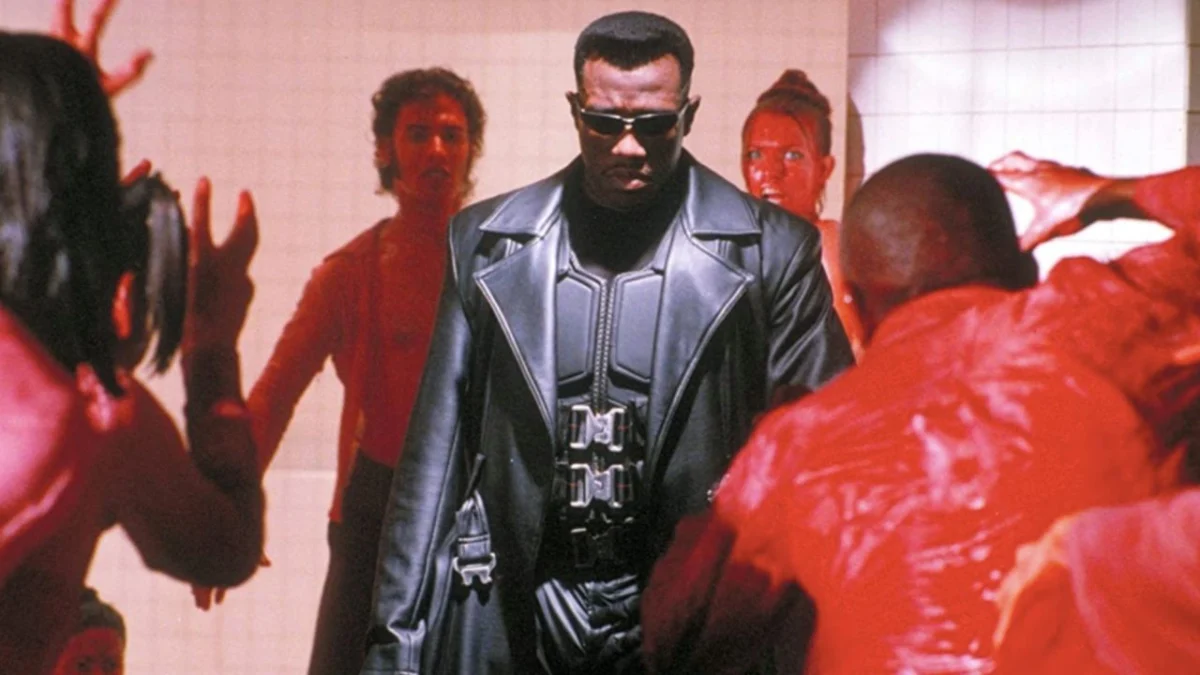
In the meticulously curated world of the Marvel Cinematic Universe (MCU), where box-office triumphs and cultural zeitgeists are the standard, admissions of defeat are exceedingly rare. However, Kevin Feige, the President of Marvel Studios and the primary architect of the highest-grossing film franchise in history, recently broke character. In a candid reflection on the state of the long-gestating Blade reboot, Feige described himself in terms seldom associated with his tenure: a "failure."
The reboot of the iconic vampire-hunter franchise, intended to star two-time Academy Award winner Mahershala Ali, has become the most prominent symbol of Marvel’s recent developmental struggles. While the MCU has successfully navigated multiversal collapses and intergalactic wars, the task of bringing Eric Brooks back to the big screen has proven to be an unexpectedly insurmountable hurdle.
Main Facts: A Rare Admission from the Architect of the MCU
The recent wave of discourse surrounding Blade was ignited by Kevin Feige’s interview with Josh Horowitz on the Happy Sad Confused podcast. Feige’s comments were striking not just for their honesty, but for their emotional weight. Discussing the juxtaposition of Wesley Snipes’ triumphant return in Deadpool & Wolverine against the stagnation of the new project, Feige was blunt.
"I’m feeling very excited that we got Wesley back for a time in Deadpool & Wolverine, and like a gigantic loser and failure that we didn’t get off the ground with Mahershala [Ali]," Feige admitted.
This statement marks a significant pivot in Marvel’s public relations strategy. For years, the studio maintained a "business as usual" front regarding Blade, even as directors departed and scripts were scrapped. By using words like "loser" and "failure," Feige has acknowledged that the project’s delay is not merely a scheduling conflict, but a systemic breakdown in the creative process.
Currently, the Blade reboot remains in a state of indefinite suspension. It has been removed from Marvel’s official release calendar, and while the studio insists the film is still in development, no production start date is in sight. The project’s absence from the upcoming slate of Phase 5 and Phase 6 films has left fans wondering if Mahershala Ali—who was first announced for the role in 2019—will ever actually don the leather trench coat.
Chronology: A Decade of Development Hell
To understand Feige’s frustration, one must look at the timeline of the Blade reboot, which has transitioned from a high-profile announcement to a cautionary tale of "development hell."
2015–2019: The Genesis
Rumors of Blade’s return to the Marvel fold began as early as 2015, following the expiration of New Line Cinema’s rights to the character. For years, Wesley Snipes expressed interest in returning, but Marvel Studios had different plans. The bombshell dropped at San Diego Comic-Con in July 2019. In the closing moments of Marvel’s Hall H presentation, Mahershala Ali walked onto the stage, put on a baseball cap emblazoned with the Blade logo, and sent the industry into a frenzy. It was later revealed that Ali himself had approached the studio with the idea, a rare occurrence for a franchise that usually dictates its own casting.
2021–2022: The First Stumble
In 2021, Marvel announced Bassam Tariq (Ghosts of Sugar Land) as the director, with Stacy Osei-Kuffour attached to write. Production was slated to begin in late 2022. However, just one month before cameras were set to roll, Tariq exited the project. Reports cited "continued shifts in the production schedule" and creative differences. This exit forced a total overhaul of the script and a search for a new director.
2023: The Strike and the Pivot
Yann Demange (Lovecraft Country) was brought in to helm the project, and the script underwent several more iterations. At one point, the story was reportedly a period piece set in the 1920s, a direction that was eventually abandoned. Michael Starrbury and later Nic Pizzolatto (True Detective) were brought in for rewrites. In late 2023, the film was officially given an R-rating, a move meant to appease fans of the original gritty trilogy. However, the WGA and SAG-AFTRA strikes further paralyzed the production, pushing the release date from 2024 to late 2025.
2024: The Removal
In early 2024, Yann Demange also exited the project. Shortly thereafter, Disney removed Blade from its November 2025 release slot, replacing it with Predator: Badlands. Currently, the film exists in a vacuum—Ali remains attached, but the production lacks a director, a finalized script, and a release date.
Supporting Data: The Shadow of Wesley Snipes
The difficulty of rebooting Blade is compounded by the immense legacy of the original films. The 1998 Blade, directed by Stephen Norrington and starring Wesley Snipes, is often credited with proving that Marvel characters could sustain a serious, R-rated cinematic franchise long before the MCU was a glimmer in Feige’s eye.
Supporting data regarding the character’s longevity highlights the challenge:
- The Record: Wesley Snipes recently broke the Guinness World Record for the longest career as a live-action Marvel character, spanning 25 years and 340 days. This longevity has forged an inseparable link between the actor and the role in the minds of the public.
- The Box Office Contrast: While the original Blade trilogy grossed over $415 million worldwide (unadjusted for inflation), it did so on relatively modest budgets. The reboot, by contrast, has already incurred millions in pre-production costs across five years of false starts without a single frame being shot.
- The "Sinners" Connection: Industry rumors suggest that some of the 1920s-era sets and costume designs developed for the abandoned version of Blade may have been repurposed for Ryan Coogler’s upcoming supernatural thriller Sinners. If true, this indicates just how far along the previous iteration was before being scrapped.
Official Responses: Silence and Self-Correction
The official stance from Marvel Studios has shifted from optimistic promotion to cautious damage control.
Mahershala Ali, typically known for his composed and professional demeanor, has become increasingly silent. In rare interviews, he has expressed his desire to "get it right," but sources close to the production suggest his patience has been tested by the constant turnover of creative teams.
Kevin Feige’s "failure" comment is the most significant official response to date. It reflects a broader shift within Disney under CEO Bob Iger, who has publicly called for a "quality over quantity" approach. In the past, Marvel might have rushed a subpar Blade script into production to meet a release date. The current delay suggests that Feige is willing to endure public embarrassment rather than release a film that doesn’t meet the high standards required to reboot a character of Blade’s stature.
On the other end of the spectrum, Wesley Snipes has been gracious yet playful. Following his cameo in Deadpool & Wolverine, where his character quips, "There’s only been one Blade. There’s only ever gonna be one Blade," Snipes took to social media to support Ali, while also acknowledging the difficulty of the task. "He’s a great actor," Snipes said of Ali. "He’s got his work cut out for him."
Implications: The Future of the Midnight Sons and the MCU
The stagnation of Blade has wider implications for the future of the MCU, particularly its "supernatural" corner.
1. The Midnight Sons Delay
Marvel has been subtly laying the groundwork for the "Midnight Sons," a team of supernatural heroes including Moon Knight, Werewolf by Night, and Ghost Rider. Blade was intended to be the cornerstone of this Gothic expansion. Without Eric Brooks, this entire sub-franchise remains in limbo, leaving characters like Oscar Isaac’s Moon Knight without a clear path forward.
2. The R-Rated Strategy
The massive success of Deadpool & Wolverine proved that there is a massive appetite for R-rated Marvel content. Blade was meant to be the next major step in this "Marvel Spotlight" or "Marvel Mature" direction. The delay suggests that Marvel is still struggling to find the right tonal balance between the dark, violent roots of the character and the interconnected requirements of the broader MCU.
3. The Casting Clock
Perhaps the most pressing implication is the age of the lead actor. Mahershala Ali is currently 50 years old. By the time a Blade film reaches theaters—likely no earlier than 2027 or 2028—he will be in his mid-50s. While actors like Tom Cruise and Keanu Reeves have proven that age is just a number in action cinema, the physical demands of a multi-film Marvel contract are significant. The longer the delay, the more difficult it becomes for Ali to headline a long-term franchise.
4. A Shift in Management Style
Feige’s admission may signal a new era of transparency at Marvel. After a rocky Phase 4 and 5, where several projects received mixed reviews, the studio seems to be moving away from the "assembly line" model. If Blade eventually arrives and succeeds, this period of "failure" will be seen as a necessary period of refinement. If it never materializes, it will remain the most significant "what if" in superhero movie history.
In conclusion, while Kevin Feige feels like a "failure" today, his refusal to settle for a mediocre Blade movie may be the very thing that saves the character in the long run. The Daywalker’s journey to the MCU has been bloodier and more complicated than anyone anticipated, but in the world of Marvel, death is rarely the end—it’s often just a very long, very expensive transition to the next chapter.

