

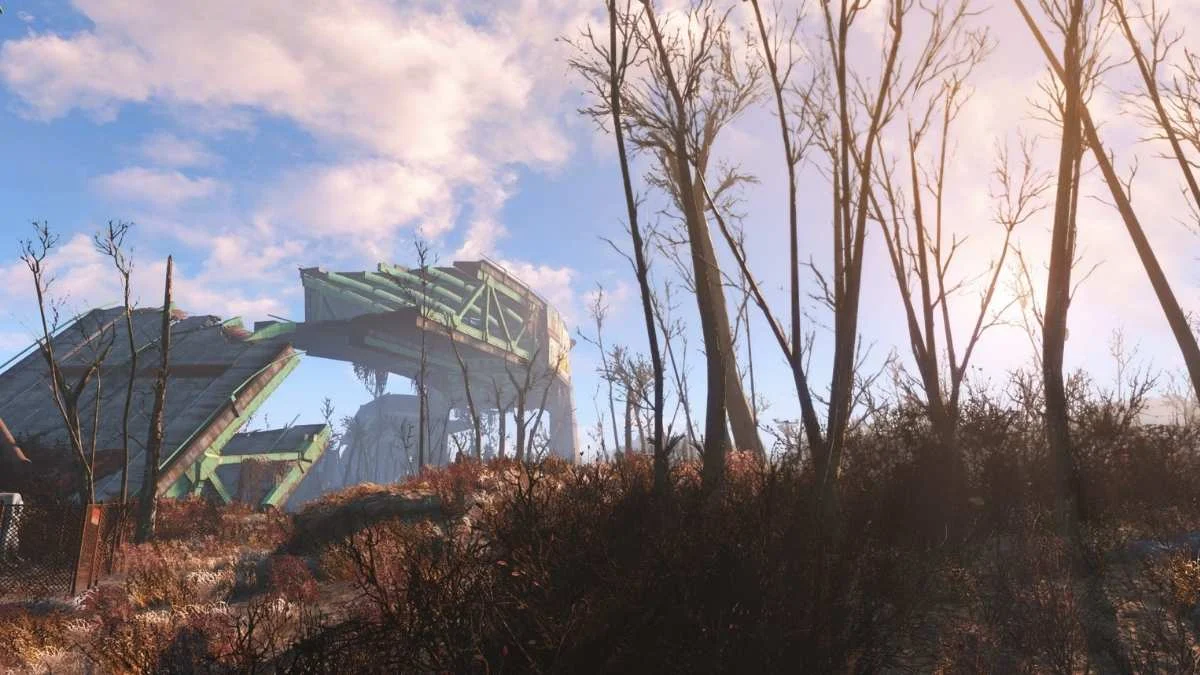
In a monumental development that has sent shockwaves through the gaming industry, Bethesda Game Studios has officially confirmed that a brand-new entry in the Fallout franchise is currently in development. Perhaps more significantly, the project marks a historic reunion between Bethesda and Obsidian Entertainment—the studio responsible for the critically acclaimed 2010 title, Fallout: New Vegas.
The announcement, delivered via a formal studio letter, serves as a cornerstone of Bethesda’s long-term roadmap. As the gaming community grapples with the implications of this partnership, speculation regarding the title’s scope, release window, and hardware destination has already begun to dominate discourse, with many analysts suggesting that the sheer scale of the project could position it as a defining title for the next generation of gaming consoles, potentially including the PlayStation 6.
Main Facts: A Partnership Reborn
The confirmation came as part of a broader communication from Bethesda Game Studios regarding their future development pipeline. While the studio highlighted ongoing support for Fallout 76 and the highly anticipated remasters of Fallout 3 and Fallout: New Vegas, the inclusion of a new, collaborative project with Obsidian stole the headlines.
"The wasteland continues to expand as we team up once again with our longtime friends at Obsidian Entertainment," the statement read. "We’re happy to confirm they’re working with us on a new Fallout project. We’ll have more to share in the future."
This partnership represents a rare alignment in the modern gaming landscape. Following the acquisition of both Bethesda (ZeniMax Media) and Obsidian Entertainment by Microsoft, the logistical hurdles that once complicated a collaboration between the two studios have been removed. This new project is not merely a spin-off; it is being positioned as a significant, mainline-adjacent entry that seeks to recapture the narrative complexity and player-agency-driven design that made New Vegas a cult classic.
Chronology: The Road to the Wasteland
To understand the weight of this announcement, one must look at the historical trajectory of the Fallout franchise and the diverging paths of the two developers.
1997–2004: The Interplay Era
The Fallout series began as a top-down, turn-based isometric CRPG developed by Interplay Entertainment. These titles established the lore—the Great War, the Vaults, the Brotherhood of Steel, and the dark, satirical tone that defined the franchise.
2008: The Bethesda Transition
With the release of Fallout 3, Bethesda Game Studios transitioned the series into a first-person, open-world action RPG, effectively merging their Elder Scrolls design philosophy with the post-apocalyptic setting. While commercially successful, some purists felt the move moved away from the deep, branching narrative choices of the originals.
2010: The Obsidian Peak
In a move that surprised many, Bethesda outsourced the development of Fallout: New Vegas to Obsidian Entertainment—a studio formed by former Black Isle (Interplay) developers. Despite a famously buggy launch, New Vegas is widely considered the narrative pinnacle of the 3D Fallout era, praised for its complex factions, moral ambiguity, and deep role-playing systems.
2011–2025: Divergent Paths
In the years following New Vegas, Bethesda focused on internal development for Fallout 4 and the multiplayer-centric Fallout 76. Meanwhile, Obsidian built a reputation for excellence in the RPG genre, delivering titles such as Pillars of Eternity, The Outer Worlds, Grounded, and the ongoing development of the fantasy RPG Avowed.
2026: The Reconciliation
The announcement in July 2026 marks the first time the two entities have formally joined forces in over a decade and a half. This reunion signals a shift in Microsoft’s strategy to leverage the full weight of its massive studio portfolio to produce "prestige" gaming experiences.
Supporting Data: Obsidian’s RPG Pedigree
Obsidian Entertainment is not the same studio it was in 2010. Their journey over the last 15 years has seen them mature into a powerhouse of systemic RPG design. The data surrounding their recent projects indicates that they are more than prepared for the technical demands of a modern Fallout game:
- World-Building Expertise: With The Outer Worlds, Obsidian proved they could create a standalone sci-fi RPG universe with a distinct visual language and satirical tone, directly channeling the spirit of Fallout.
- Narrative Complexity: The Pillars of Eternity series demonstrated a mastery of non-linear storytelling, with complex reactivity to player choices—a key pillar of the Fallout experience.
- Technical Versatility: Through Grounded, Obsidian showcased their ability to handle live-service elements and survival mechanics, which could prove invaluable given the current state of the Fallout brand as a multi-faceted franchise.
- The "Avowed" Lesson: As Obsidian prepares to launch Avowed, they are refining their ability to develop high-fidelity, first-person fantasy combat. The lessons learned here are expected to translate directly into the gunplay and combat mechanics of the new Fallout.
Official Responses and Industry Context
The reaction to the announcement has been overwhelmingly positive, though guarded. Bethesda’s leadership has been careful to manage expectations, emphasizing that the project is in the early stages of development.
In the official statement, the studio noted: "We love making these worlds as much as you love playing in them. Today, we want to share what’s next for Bethesda Game Studios and what you can expect from us in the years ahead."
Industry analysts have interpreted this statement as a signal that Bethesda is prioritizing quality over speed. By bringing in Obsidian, Bethesda is effectively "doubling down" on their RPG roots, acknowledging that the franchise needs the specific narrative touch that Obsidian provides to satisfy long-term fans.
For their part, Obsidian has remained tight-lipped, with studio leads merely reiterating their excitement to return to the world of Fallout. This silence is consistent with their usual development cycle, where they prefer to show concrete gameplay rather than tease conceptual ideas.
Implications: The PlayStation 6 Factor and Future Gaming
The most provocative question raised by this announcement is not "what" the game is, but "when" it will launch and on what hardware.
The Generational Shift
Given the lengthy development cycles of modern AAA RPGs—which frequently span five to seven years—it is highly probable that this new Fallout will be a "cross-gen" or next-gen title. With the current hardware cycle reaching its mid-point, a late-decade release aligns perfectly with the rumored launch window of the next generation of consoles.
Why PlayStation 6?
While Microsoft owns Bethesda and Obsidian, the company has increasingly adopted a multi-platform strategy for its major franchises, as evidenced by the release of titles like Sea of Thieves and Indiana Jones and the Great Circle on PlayStation consoles. If the new Fallout is intended to be a multi-generational, "system-selling" RPG, it would be commercially advantageous for Microsoft to release it on all available platforms, including whatever hardware Sony produces for the next cycle.
The Impact on the RPG Landscape
The announcement also signals a return to the "Big RPG" era. After years of the industry pivoting toward live-service shooters and competitive multiplayer, there is a clear appetite for dense, single-player, narrative-driven experiences. A collaboration between Bethesda’s world-building scale and Obsidian’s writing depth could set a new benchmark for the genre, forcing competitors to rethink their own RPG development strategies.
The Risks of Expectation
The primary risk for this project is the weight of history. Fallout: New Vegas has attained a status of near-mythic importance among fans. Any new title bearing the Fallout name—especially one developed by Obsidian—will be subjected to intense scrutiny. If the game fails to capture the "magic" of New Vegas, it could be perceived as a disappointment, regardless of its objective quality.
Conclusion: A New Dawn for the Wasteland
The announcement of a new Fallout title from Obsidian Entertainment is a watershed moment for the gaming industry. It represents the healing of a creative rift, the maturation of two iconic studios, and the potential for the Fallout franchise to reach new heights of narrative and mechanical depth.
While we remain in the early stages of this journey, the implications are clear: the wasteland is not just expanding—it is evolving. Whether this title eventually graces the screens of a PlayStation 6, an Xbox successor, or a high-end PC, the promise of a deep, player-driven RPG set in the iconic Fallout universe is enough to ignite the excitement of a generation of gamers. For now, we wait for the next broadcast from the wasteland, knowing that when it finally arrives, it will likely change the landscape of the RPG genre forever.

