

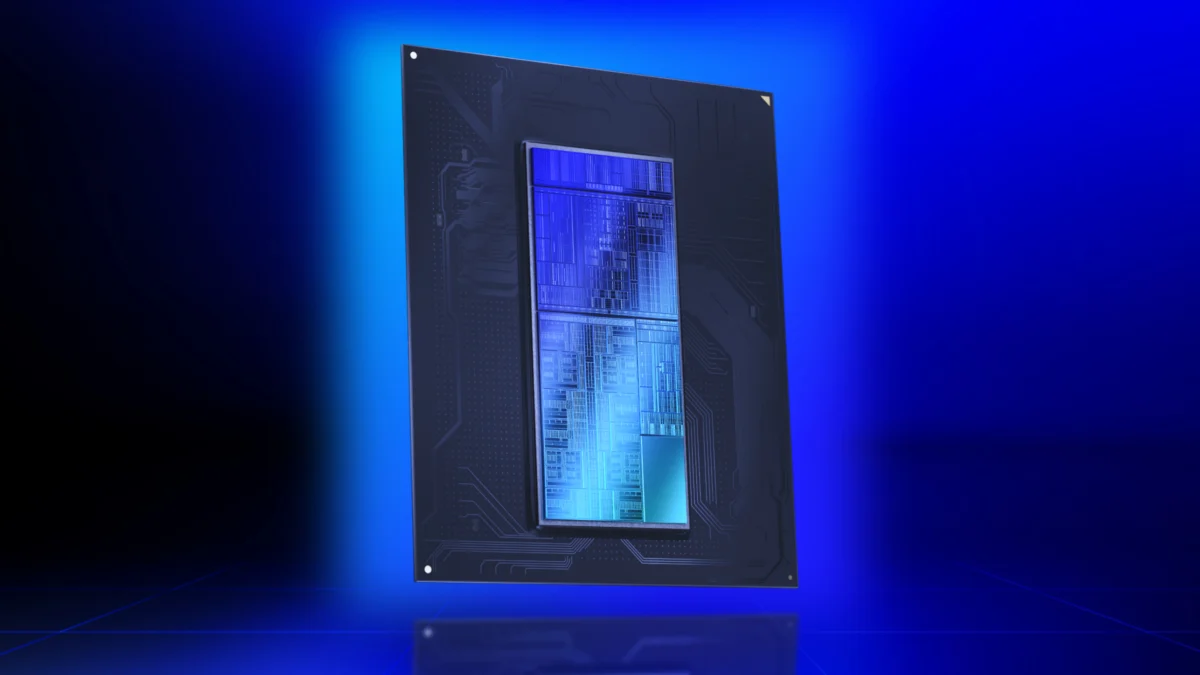
Taipei, Taiwan – The battle for desktop CPU supremacy is heating up, with Intel reportedly preparing a monumental generational leap in performance for its upcoming Nova Lake processor family. Central to this anticipated advancement is the aggressive integration of "Big Last Level Cache" (bLLC), a direct challenge to AMD’s highly successful X3D chips featuring 3D V-Cache technology. Recent leaks suggest that Intel is not only embracing this cache-heavy strategy but is doing so with an unprecedented scale, even extending it to mainstream segments like the Core Ultra 5 series.
A significant new leak from hardware enthusiast Jaykihn has revealed the existence of two new Core Ultra 5 SKUs within the Nova Lake lineup, both poised to feature this groundbreaking bLLC. These chips are rumored to boast a substantial 22 cores each, configured with a sophisticated hybrid architecture comprising 6 Performance-cores (P-Cores), 12 Efficiency-cores (E-Cores), and 4 Low-Power Efficiency-cores (LP-E cores) on a single tile. This configuration is expected to grant access to an impressive 144MB of bLLC, signaling Intel’s intent to deliver a formidable gaming and data-intensive performance proposition across a wider range of price points.
The leaked information further specifies two variants of these 22-core Core Ultra 5 chips: an unlocked SKU with a Thermal Design Power (TDP) of 125W, and a locked SKU operating at a more power-efficient 65W. Intriguingly, beyond their power envelopes and overclocking capabilities, these two models are expected to share identical core configurations and bLLC allocations, suggesting a strategic move by Intel to offer high-cache benefits to both enthusiasts and mainstream users. This development marks a potential departure from earlier speculation that bLLC might be confined exclusively to premium, unlocked "K-series" processors, indicating a broader assault on AMD’s cache-driven dominance.
The Dawn of Nova Lake: A Generational Leap for Intel
Nova Lake represents a critical juncture for Intel, positioning itself as the successor to the current generation of desktop processors and aiming to redefine performance expectations. For years, Intel has iterated on its hybrid architecture, refining the balance between powerful P-cores and efficient E-cores. Nova Lake is set to push this paradigm further with entirely new core architectures: the "Coyote Cove" for its P-cores and "Arctic Wolf" for its E-cores. These microarchitectural advancements are anticipated to bring significant Instruction Per Cycle (IPC) gains, enhancing raw processing power across various workloads, from demanding professional applications to high-refresh-rate gaming.
However, the most talked-about innovation is undoubtedly bLLC. Last Level Cache (LLC) is a crucial component of modern CPUs, acting as a high-speed buffer between the processor and slower main memory (RAM). A larger and faster LLC can dramatically reduce latency and increase bandwidth for frequently accessed data, leading to substantial performance improvements in applications that are sensitive to memory access times, such as gaming, scientific simulations, and large database operations.
Intel’s bLLC is specifically designed to counter AMD’s 3D V-Cache, which has garnered widespread acclaim for its ability to significantly boost gaming performance by stacking an additional layer of L3 cache directly onto the CPU die. While the precise technical implementation of Intel’s bLLC remains under wraps, the sheer scale of the rumored cache sizes (144MB for single-tile and potentially up to 288MB for dual-tile configurations) suggests an aggressive and comprehensive response. This move underscores a growing industry consensus that cache size, alongside core count and clock speed, is a vital determinant of real-world performance in modern computing.
Chronology of Anticipation: Nova Lake’s Evolving Narrative
The journey to Nova Lake has been paved with a series of leaks, rumors, and strategic positioning that highlight the intense competition in the CPU market.
Intel’s recent history has seen a rapid evolution of its desktop architectures. Following the groundbreaking Alder Lake (12th Gen) which introduced the hybrid P-core/E-core design, subsequent generations like Raptor Lake (13th Gen) and Raptor Lake Refresh (14th Gen) focused on refining this architecture, boosting clock speeds, and increasing E-core counts. The mobile segment has already seen the launch of Meteor Lake (Core Ultra 100 series) and the upcoming Arrow Lake (Core Ultra 200 series) and Lunar Lake (Core Ultra 300 series) are also on the horizon, further iterating on advanced packaging and integrated NPU capabilities for AI workloads. Nova Lake, expected to be branded as the Core Ultra 400 series, is positioned as the next major architectural leap for the desktop platform, moving beyond the foundational hybrid designs of its predecessors.
Initial whispers about Nova Lake began to surface over a year ago, hinting at a radical departure in core design and an aggressive push for performance leadership. Early speculation often centered on increased core counts and improved power efficiency, standard expectations for a new generation. However, the concept of a significantly expanded Last Level Cache, dubbed "bLLC," emerged as a distinct and highly anticipated feature, explicitly framing Nova Lake as Intel’s direct counter-offensive against AMD’s successful 3D V-Cache technology.
One prominent rumor, which circulated prior to Jaykihn’s latest leak, suggested a high-end Nova Lake-S SKU might feature an alleged 42 cores. This was later updated, with sources indicating that this top-tier silicon could actually boast 44 cores, leveraging a configuration of two 8P+12E tiles. The significance of this adjustment wasn’t just the higher core count; it was the implication that this refined configuration could potentially "free up" other silicon tiles, specifically 6P+12E arrangements. At the time, industry analysts speculated that these "freed" tiles could be repurposed for more mainstream Core Ultra 7 SKUs equipped with bLLC, offering a wider accessibility to the high-performance cache.
Jaykihn’s recent leak, however, refines this narrative further, suggesting that these 6P+12E tiles, combined with 4 LP-E cores for a total of 22 cores, are instead being targeted for the Core Ultra 5 lineup. This move is particularly impactful as it indicates Intel’s commitment to bringing the bLLC advantage to a broader consumer base, not just the ultra-premium segments. The idea that bLLC might be limited to only unlocked "K-series" models, a concern raised in previous reports, now appears to be fading, replaced by the prospect of cache-rich options across both unlocked and locked TDP segments.
The projected launch timeline for Nova Lake, currently anticipated as the Core Ultra 400 series, points towards an announcement possibly at CES 2027. This places it several years out, allowing for further development and refinement. However, the current global component crisis and ongoing supply chain challenges pose a persistent threat to these timelines, a factor that has impacted numerous product launches across the technology sector in recent years. The industry will be closely watching for any official confirmations or revised schedules as the projected launch window approaches.
Supporting Data: A Deep Dive into Nova Lake’s Technical Arsenal
To truly understand the potential impact of Intel’s Nova Lake, it’s essential to dissect the underlying technologies and the strategic choices being made.
Architectural Innovations:
- Coyote Cove (P-cores): These will be the primary workhorses, handling demanding tasks and single-threaded performance. Expected to succeed Redwood Cove (in Arrow Lake) and Lion Cove (in Lunar Lake), Coyote Cove P-cores are anticipated to deliver significant IPC improvements over current generations. This involves advancements in front-end optimization (branch prediction, instruction fetch), execution units, and memory subsystem interactions. The goal is to provide superior raw computing power for applications like gaming, video editing, and complex computational workloads.
- Arctic Wolf (E-cores): Designed for energy efficiency and handling background tasks, multi-threaded workloads, and less demanding processes. Arctic Wolf E-cores are expected to build upon the efficiency gains of their predecessors (Crestmont in Meteor Lake, Skymont in Arrow Lake/Lunar Lake). Enhancements will likely focus on improving performance per watt, allowing the chip to manage more concurrent tasks with lower power draw, contributing to better overall system responsiveness and battery life in mobile variants (though Nova Lake is desktop-focused).
- LP-E Cores (Low-Power Efficiency Cores): This relatively newer addition to Intel’s hybrid strategy, first seen in Meteor Lake, focuses on ultra-low power consumption. Positioned within the System-on-Chip (SoC) tile rather than the main CPU core tile, these cores are designed to handle extremely light background tasks, manage system idle states, and offload certain processing duties from the more powerful P and E cores. This allows the main core complex to remain in lower power states for longer, significantly improving overall platform efficiency, especially for desktop idle power consumption or light productivity.
The Power of bLLC:
Intel’s "Big Last Level Cache" is its answer to a critical performance bottleneck: the speed difference between the CPU and main memory. While RAM speeds have increased, they still lag significantly behind CPU processing speeds. LLC helps bridge this gap by storing frequently accessed data closer to the CPU, reducing the need to fetch data from slower RAM.
- Mechanism: While AMD’s 3D V-Cache uses a vertical stacking approach (3D stacking of SRAM on top of the compute die), Intel’s bLLC might employ a different integration method. It could involve a significantly larger L3 cache pool integrated directly onto the compute die, or perhaps leveraging advanced 2.5D packaging techniques (like Intel’s Foveros) to integrate large cache dies alongside the main CPU tiles. The "b" in bLLC suggests a focus on sheer capacity, similar to how AMD approaches its X3D variants.
- Performance Impact: A large LLC is particularly beneficial for:
- Gaming: Many modern games involve large datasets (textures, game state, AI instructions) that are frequently accessed. A larger cache reduces latency for these accesses, leading to smoother frame rates, fewer stutters, and overall better gaming experiences. This is where AMD’s X3D chips have excelled.
- Data-Intensive Workloads: Applications like databases, scientific simulations, compilers, and certain content creation tools (e.g., video rendering with large temporary files) can also see substantial gains from increased cache.
- Multi-threaded Performance: While less impactful than for single-threaded tasks, a larger cache can still improve data sharing and reduce contention between multiple cores accessing the same data.
Comparing 144MB and 288MB bLLC:
The rumored 144MB bLLC for the 22-core Core Ultra 5 SKUs is already a substantial amount, significantly larger than the L3 cache found in most standard desktop CPUs today. For context, AMD’s Ryzen 7 7800X3D features 96MB of L3 cache. Intel’s potential 144MB is a clear statement of intent.
The possibility of dual-tile variants pushing cache counts up to 288MB is even more astounding. This level of cache could theoretically provide an unparalleled buffer for extremely demanding workloads, potentially setting new benchmarks for performance in specific niches. These high-end configurations would likely target professional workstations, extreme enthusiasts, and specialized data processing centers.
Core Configuration Analysis (6 P-Cores, 12 E-Cores, 4 LP-E Cores):
The 22-core configuration (6P+12E+4LP-E) is a balanced design aimed at versatility.
- 6 P-Cores: Provides strong single-threaded performance for gaming and core application tasks.
- 12 E-Cores: Offers excellent multi-threaded capability for background processes, multitasking, and applications that can scale across many threads, all while maintaining good power efficiency.
- 4 LP-E Cores: Ensures system responsiveness and power savings during light usage, reducing overall power consumption and heat output.
This hybrid approach, combined with 144MB of bLLC, suggests a chip designed to be a potent all-rounder, excelling in gaming while maintaining strong productivity performance and efficiency.
Nova Lake-S Rumored SKUs Table Analysis:
The leaked table provides a glimpse into the breadth of Intel’s Nova Lake-S strategy.
- High-End Dominance (52 & 44 Cores, Dual-Tile): The 52-core ((8+16)+(8+16)+4) and 44-core ((8+12)+(8+12)+4) dual-tile SKUs with 288MB and 264MB bLLC respectively, and 175W TDP, clearly target the absolute top tier of the market. These are direct challengers to AMD’s highest core count Threadripper or top-tier Ryzen chips, emphasizing raw processing power and massive cache for enterprise-level or extreme enthusiast workloads.
- Mainstream Performance (28, 24, 22 Cores): The single-tile 28-core (8+16+4), 24-core (8+12+4), and 22-core (6+12+4) SKUs with 144MB, 132MB, and 108MB bLLC (or unspecified cache for some variants) and TDPs ranging from 125W to 65W, show Intel’s intent to bring bLLC benefits to the mainstream Core Ultra 7 and Core Ultra 5 segments. This is a critical move, as it directly addresses the segment where AMD’s X3D chips have been particularly strong. The presence of both 125W unlocked and 65W locked versions with the same core configurations in these tiers offers flexibility for different cooling solutions and power budgets.
- Entry-Level & Efficiency (16, 12, 8, 6 Cores): The lower-core-count SKUs (16-core (4+8+4), 12-core (4+4+4), 8-core (4+0+4), 6-core (2+0+4)) with 65W/35W TDPs indicate Intel’s commitment to offering efficient options for more budget-conscious builds or systems with strict power requirements. While these are not listed with bLLC, their presence ensures a comprehensive product stack.
The sheer variety of SKUs, combined with the bLLC implementation, highlights a multi-pronged strategy by Intel to reclaim performance leadership across the entire desktop market, from enthusiast to entry-level.
Official Responses: Navigating the Rumor Mill
As is standard practice in the highly competitive semiconductor industry, Intel has maintained a policy of not commenting on leaks or unconfirmed product roadmaps. This stance is typical for companies protecting their intellectual property and market strategies. Any official confirmation of Nova Lake specifications, features, or launch timelines will come directly from Intel through official announcements, product launches, or investor calls.
However, Intel’s broader strategic communications often provide context. The company has consistently emphasized its commitment to innovation, leadership in manufacturing process technology (e.g., Intel 20A, Intel 18A), and the ongoing evolution of its hybrid core architectures. The "Core Ultra" branding itself signifies a shift towards integrating AI acceleration (via NPUs) and advanced packaging techniques across its product lines. While they won’t confirm "Nova Lake" or "bLLC" directly based on leaks, their general messaging reinforces a trajectory towards higher performance, greater efficiency, and more sophisticated chip designs.
Past experiences with leaks in the tech industry show a mixed bag of accuracy. Some leaks turn out to be remarkably precise, offering an early glimpse into future products. Others prove to be partially accurate, with details changing before launch, or entirely speculative. Therefore, while Jaykihn’s leak provides exciting prospects, it remains important for consumers and industry observers to treat these details as rumors until Intel’s official unveiling.
Implications: Reshaping the Desktop Landscape
The potential arrival of Intel’s Nova Lake with its aggressive bLLC implementation carries significant implications for the desktop CPU market, technological trends, and Intel’s competitive standing.
Market Impact:
- Intensified Competition: Nova Lake, especially with bLLC, will undoubtedly intensify the rivalry between Intel and AMD. For years, AMD’s X3D chips have carved out a niche as the undisputed gaming performance leaders. Intel’s direct and aggressive answer could shake up this dynamic, forcing both companies to innovate further and potentially leading to more competitive pricing for consumers.
- Gaming Performance Shift: If Nova Lake lives up to the bLLC hype, Intel could reclaim a significant portion of the gaming market segment where it has recently lagged. This would be a welcome development for PC gamers, offering more choice and potentially driving performance upwards across the board.
- Mainstream Accessibility: The rumored Core Ultra 5 SKUs with 144MB bLLC are particularly impactful. By bringing such a large cache to a more mainstream price point, Intel could democratize high-performance computing benefits, making cache-sensitive workloads more accessible to a broader user base.
- Pricing Strategy: Intel’s pricing strategy will be crucial. To compete effectively with AMD’s established X3D line, Nova Lake chips will need to offer compelling performance-per-dollar, especially in the mid-range.
Technological Trends:
- Cache as a Performance Metric: Nova Lake’s bLLC further solidifies the trend of cache size becoming an increasingly vital performance metric, particularly for gaming and specific professional applications. This signals a shift in focus beyond just core counts and clock speeds.
- Evolution of Hybrid Architectures: The integration of Coyote Cove, Arctic Wolf, and LP-E cores demonstrates Intel’s continued commitment to and refinement of its hybrid architecture. This multi-core, multi-function approach is likely to be the standard for future high-performance CPUs, balancing raw power with energy efficiency.
- Advanced Packaging: The mention of dual-tile variants for higher core and cache counts hints at Intel’s increasing reliance on advanced packaging technologies (like Foveros or EMIB). These techniques allow Intel to integrate multiple dies (compute, graphics, cache, I/O) into a single processor package, improving scalability, manufacturing yields, and performance.
- AI Integration: While not explicitly detailed in this leak, the "Core Ultra" branding strongly implies a continued emphasis on integrated AI acceleration (NPUs). Nova Lake chips will likely feature enhanced AI capabilities, aligning with Intel’s broader vision for AI PCs.
Challenges and Outlook:
- Manufacturing Complexity: Implementing bLLC at such a large scale presents manufacturing challenges. Integrating vast amounts of high-speed SRAM requires advanced process nodes and potentially complex stacking or integration techniques, which can impact yields and cost.
- Power Consumption: While bLLC enhances performance, large caches can also contribute to power consumption and heat generation. Intel will need to optimize its bLLC implementation to manage these factors, especially for the 65W locked SKUs.
- Product Naming: The expanding product stack with numerous core configurations, bLLC variants, and TDPs will make product differentiation and naming a complex task for Intel, especially under the new "Core Ultra" branding. Clear segmentation will be essential for consumer understanding.
- Component Crisis: The persistent global component crisis remains a wild card. Any disruptions in manufacturing or supply chains could lead to further delays, affecting Nova Lake’s launch schedule and availability.
In conclusion, Intel’s Nova Lake, with its rumored bLLC, new core architectures, and diverse SKU lineup, is shaping up to be a formidable contender in the desktop CPU arena. If these leaks hold true, Intel is preparing a comprehensive and aggressive strategy to reclaim performance leadership, particularly in gaming, and push the boundaries of what consumers can expect from their desktop processors. The industry eagerly awaits official confirmation and the eventual arrival of what could be a truly transformative generation of Intel CPUs.

