

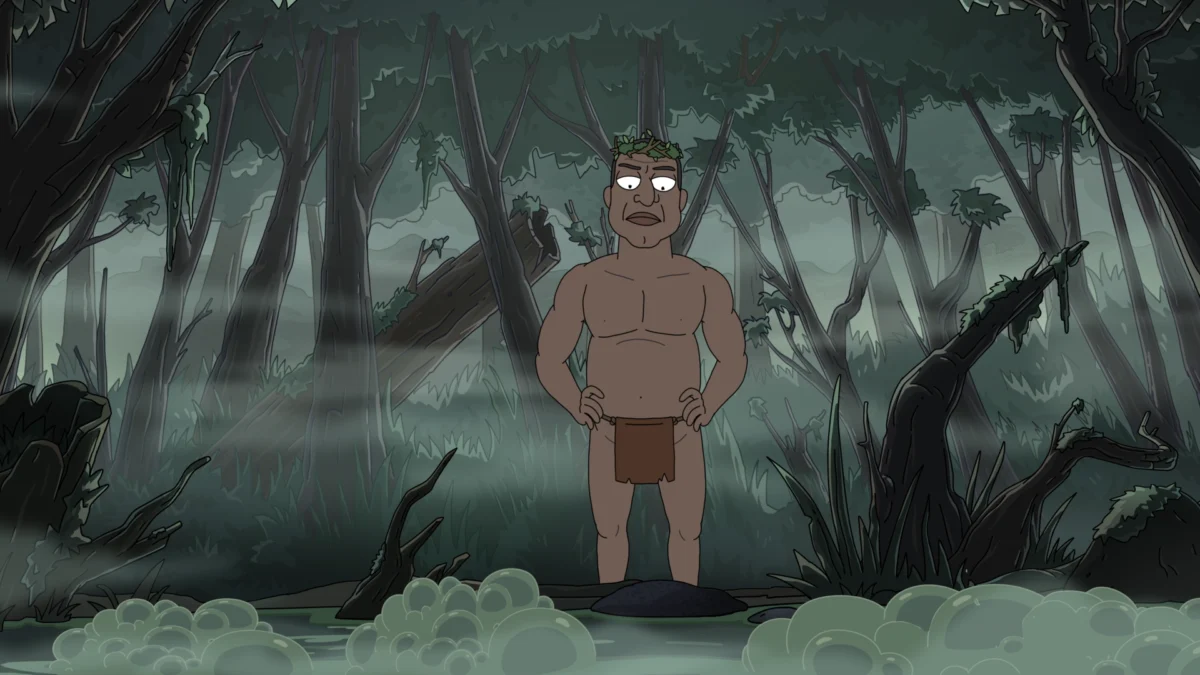
As the entertainment industry navigates an increasingly polarized and sensitive political climate, even the most irreverent animated series are finding themselves forced to adjust their creative compasses. With the upcoming Adult Swim premiere of President Curtis—the highly anticipated spinoff of the global phenomenon Rick and Morty—creators Dan Harmon and James Siciliano have revealed that the current state of American politics has necessitated last-minute creative revisions, including the excision of jokes that hit too close to the reality of the Oval Office.
Set to launch on July 26, 2026, President Curtis follows the exploits of the character famously voiced by Keith David. While the show was conceived during a period of relative political stability, its arrival coincides with a national mood dominated by record-low approval ratings and a cynical electorate. The challenge for the production team has been clear: how does one create a satirical, high-concept political comedy when the real-world political landscape feels increasingly like a dark, unintentional parody?
A Creative Evolution: From "Thanksploitation" to Spin-off
The genesis of President Curtis dates back to the 2021 Rick and Morty Season 5 episode, "Rick & Morty’s Thanksploitation Spectacular." In that outing, President Andre Curtis—a character defined by his ego, his rivalry with Rick Sanchez, and his tendency to engage in erratic power grabs—left an indelible mark on fans.
Following a screening of the pilot at the Annecy International Animation Film Festival on June 27, 2026, Harmon reflected on the long road to production. "We didn’t start this show in a long-forgotten Camelot," Harmon remarked during the post-screening Q&A. "We thought we were already operating in crazy times when we greenlit this project. Looking back, the question isn’t just how we make this funny; it’s how we make this distinct from a reality that seems to be absorbing our wildest pitches."
Harmon’s comments highlight the "Simpsons Paradox" that modern showrunners face: the speed at which real-world events eclipse scripted satire. What was intended as a standalone exploration of a recurring Rick and Morty antagonist has morphed into a character study of leadership, one that the creators are now carefully calibrating to ensure it doesn’t accidentally mirror current headlines.
The Character Arc: Redefining the Commander-in-Chief
To distinguish the spin-off from the established Rick and Morty canon, Harmon and Siciliano have intentionally softened the edges of President Curtis. In the flagship series, Curtis was often a manifestation of institutional ego, willing to merge with a hive mind or leverage his position for petty squabbles with a mad scientist.
In his own series, however, Curtis is being repositioned as an "idealized" leader. Harmon describes the character as having the relentless, civic-minded passion of Leslie Knope from Parks and Recreation, blended with the high-tech, tactical capabilities of Batman.
"He’s born to be a leader, but he very much has a golden retriever kind of personality," Harmon explained. "He serves, he fetches, he rescues, and he slays if he has to. We wanted a character who is fundamentally committed to the office, even if the world around him is a chaotic, sci-fi nightmare."
This pivot toward a more earnest, competent version of the presidency is a deliberate strategic choice. By moving away from the more cynical portrayal seen in Rick and Morty, the creators hope to offer a version of the White House that provides a "refreshing" escapist fantasy for viewers—a world where the person in the chair is motivated by duty rather than self-interest or partisan maneuvering.
The Trump Factor: When Satire Becomes Too Real
Perhaps the most revealing aspect of the production’s development is the revelation that certain creative beats had to be abandoned entirely due to the actions of real-world political figures. Harmon admitted that a recurring joke regarding Curtis’s expansionist foreign policy—specifically, his desire to add new stars to the American flag—had to be scrapped after it bore an uncomfortable resemblance to Donald Trump’s real-world geopolitical proposals, such as his past interest in purchasing Greenland.
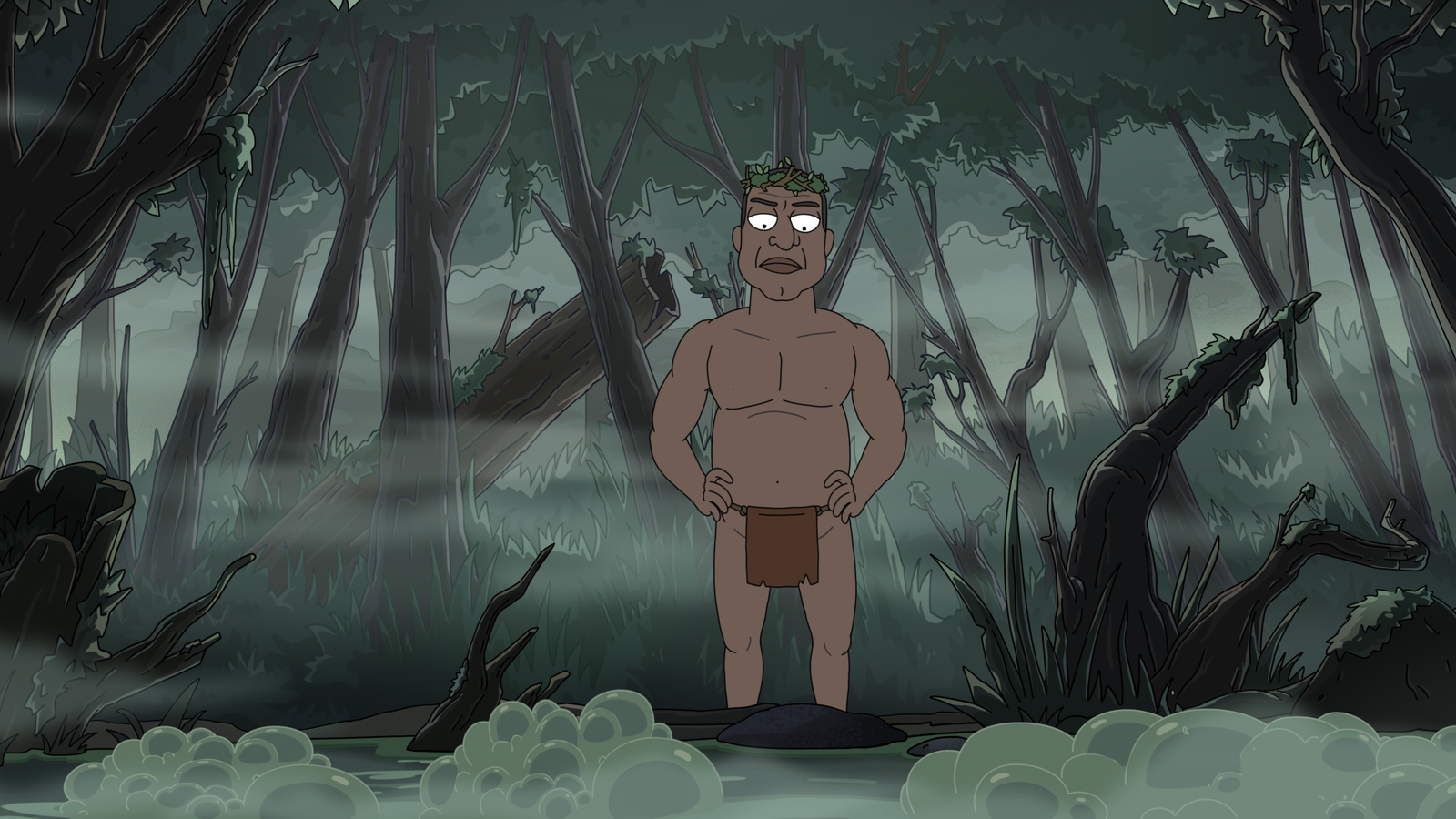
"I thought it would be cool if a staple of President Curtis’s character was that he was such a Boy Scout, such a believer in the globalist vision of America," Harmon said. "He wanted to bring back the spirit of expansion, adding stars to the flag. Then, you know who started popping off on it, and now we literally can’t do this. It stops being satire and starts being a news report."
This incident underscores the difficulty of writing for a medium that relies on absurdity. When real-world politicians engage in actions that sound like they were pulled from a Rick and Morty writers’ room, the satire loses its bite because the audience can no longer distinguish the joke from the reality. For Harmon, this has meant constant revisions to ensure the show maintains its own identity separate from the current national discourse.
Chronology of the Production
- 2021: President Andre Curtis debuts in the Rick and Morty episode "Rick & Morty’s Thanksploitation Spectacular," becoming an instant fan favorite.
- 2023: Initial talks between Dan Harmon and Adult Swim regarding a potential spin-off series begin, focusing on the President’s role in the Rick and Morty multiverse.
- 2024: Production begins; writers focus on a "Boy Scout" version of the character, initially including jokes about territorial expansion.
- 2025: As real-world political rhetoric shifts, the production team begins "softening" the character to distance him from contemporary figures.
- June 2026: The pilot is screened at the Annecy International Animation Film Festival to positive reviews, despite the creators’ admitted anxiety regarding the show’s political themes.
- July 26, 2026: Official premiere date for President Curtis on Adult Swim.
Implications for the Future of Animation
The struggle faced by the President Curtis team is symptomatic of a larger trend in adult animation. As social media and 24-hour news cycles accelerate the pace of cultural discourse, shows that attempt to satirize current events are finding that their "shelf life" is shrinking.
"How did we know the president was going to depress people four years ago?" Harmon quipped at Annecy. "What warning signs did we have?"
This rhetorical question strikes at the heart of the modern creative process. Writers are now forced to navigate a "political minefield" where the audience is already exhausted by the subject matter. By choosing to focus on a character who is "dedicated to the job" rather than one who "plays politics," Siciliano and Harmon are attempting to provide an antidote to the cynicism that has permeated modern political comedy.
Whether this approach will resonate with an audience currently experiencing high levels of "political fatigue" remains to be seen. However, the move represents a significant pivot in the Rick and Morty brand. By shifting from the nihilistic, chaotic energy of the original series toward a slightly more hopeful, character-driven narrative, the team is gambling that fans are ready for a hero—even if that hero is a cartoon President in a world that feels increasingly unmanageable.
Conclusion: A Test of Tone
As the July 26 premiere approaches, all eyes are on whether President Curtis can strike the right balance. The show is attempting to perform a delicate tightrope walk: it must retain the sharp, irreverent DNA of its parent series while functioning as a grounded, engaging political fable that doesn’t inadvertently become a source of further viewer fatigue.
In a climate where "the news" is often indistinguishable from "the punchline," the success of President Curtis will depend on whether it can successfully transcend the real-world politics that nearly derailed its script. As Siciliano noted, the goal is simple: "It’s not his job to lie or serve himself or play politics. He’s dedicated to the job, so it’s refreshing."
If the show can capture that sense of duty amidst the sci-fi madness, it may well prove that audiences are ready for a new kind of political comedy—one that looks at the office of the President not as a source of national dread, but as a lens through which to explore the absurd, the heroic, and the human.

