

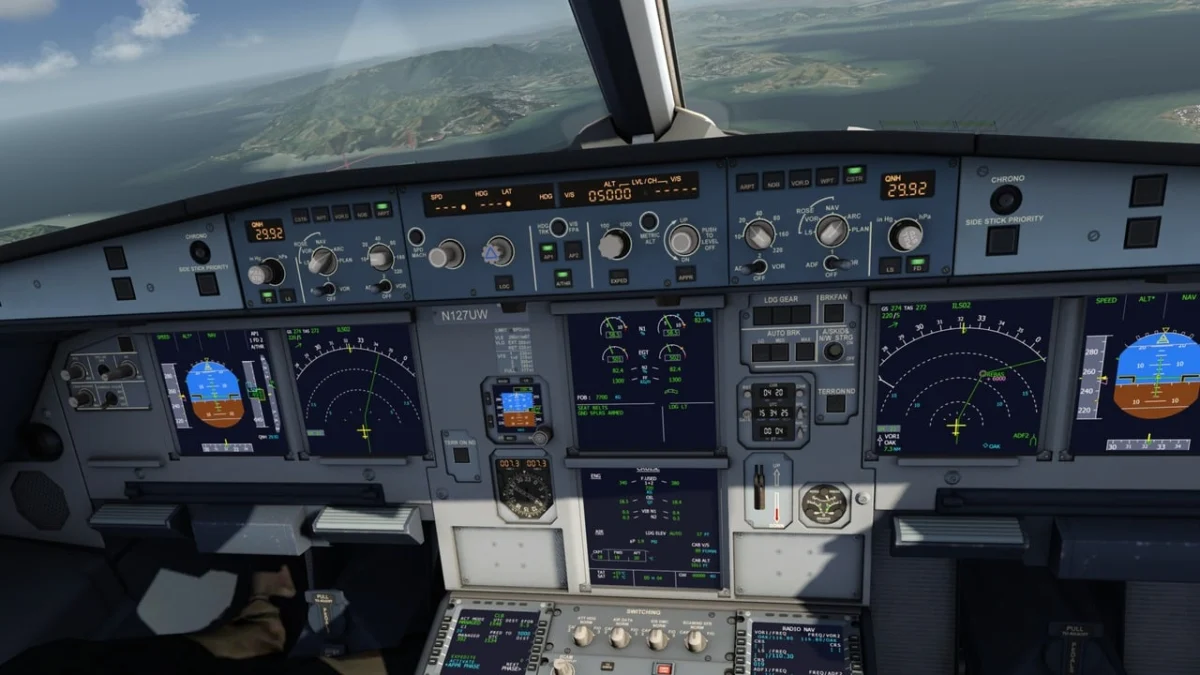
The global phenomenon of Microsoft Flight Simulator reignited a long-dormant passion for aviation among the general public. However, the barrier to entry remains high; the requirement for high-end, expensive hardware has left many aspiring virtual pilots grounded. Fortunately, the mobile gaming ecosystem has matured rapidly, offering sophisticated alternatives that fit right in your pocket. Whether you are commuting on a train or looking for a quick diversion during a break, the world of mobile flight simulation has never been more accessible or immersive.
In this deep dive, we explore the state of Android flight simulation, examining the technology that makes it possible, the titles that define the genre, and what the future holds for mobile aviation enthusiasts.
The Rise of Mobile Aviation: Main Facts
The transition from PC-based simulation to mobile platforms represents a significant milestone in software engineering. Modern mobile flight simulators are no longer the "arcade-style" toys of the past. Today’s Android simulators utilize advanced physics engines, real-time satellite imagery, and high-fidelity flight models that challenge the pilots’ ability to manage navigation, aerodynamics, and complex avionics systems.
The core appeal of these titles lies in their accessibility. While desktop simulators require dedicated yokes, throttles, and pedals, mobile simulators leverage gyroscopes, touch-screen interfaces, and AI-assisted flight controls to bridge the gap. Key features that have become standard in high-tier Android simulators include:
- Real-time Weather Integration: Many apps now sync with global meteorological services to provide accurate wind, visibility, and storm patterns.
- Satellite-Mapped Terrain: Leveraging data from providers like Bing or Google, developers can now render vast, recognizable landscapes that reflect real-world geography.
- Procedural Flight Management: Users are tasked with everything from flight planning and ATC (Air Traffic Control) interaction to complex engine start-up procedures.
A Brief Chronology of Flight Sim Evolution
The journey of flight simulation on mobile devices began with simplistic titles, often criticized for their "on-rails" gameplay. Here is a brief look at how the genre has ascended:
- The Early Years (2008–2012): Initial mobile flight games were primarily action-oriented. Navigation was minimal, and the "sim" aspect was largely superficial, focusing on simple flight paths and combat rather than navigation or systems management.
- The Middleware Revolution (2013–2017): As hardware acceleration improved, developers began integrating more complex physics. This era saw the rise of engines capable of handling larger draw distances and more stable frame rates, allowing for more realistic landing and takeoff mechanics.
- The Current Era (2018–Present): The release of cloud-synced simulators and advanced mobile processors has allowed for "global" flight simulation. We have moved from isolated maps to a truly connected, planet-wide flying experience where players can cross oceans in real-time.
Supporting Data: Comparing the Best of Android
To help you decide which cockpit to climb into, we have analyzed three of the most popular titles currently available on the Google Play Store.

1. Real Flight Simulator (RFS) – The Global Experience
Holding a respectable 4.2-star rating, RFS is widely recognized for its ambition. While it lacks some of the extreme mechanical depth found in hardcore PC simulators, it offers a polished, "premium" feel.
- The Verdict: It is an excellent middle ground. It provides global flight capabilities, accurate airport recreations, and real-time weather.
- Target Audience: Pilots who want a "set it and forget it" long-haul experience with visually appealing, modern UI design.
2. Turboprop Flight Simulator 3D – The Mechanical Marvel
Boasting an impressive 4.6-star rating, this title stands out for its unique focus on propeller-driven aircraft. Unlike many competitors that focus on high-speed jets, Turboprop offers a more granular look at the mechanics of heavy cargo and tactical aircraft.
- The Verdict: Its greatest strength is the depth of interactivity. The ability to walk around the aircraft and control ground vehicles adds a layer of immersion that is often missing in mobile sims. Furthermore, its consumer-friendly monetization model—free with optional, non-intrusive ads—makes it a must-try.
- Target Audience: Those who appreciate the "work" of aviation, including manual taxiing, loading cargo, and understanding the unique torque of propeller planes.
3. Aerofly FS Global – The Performance Powerhouse
With a 4.0-star rating, Aerofly FS Global is frequently lauded for its graphical fidelity. Despite being a smaller installation compared to its peers, it punches well above its weight class in terms of rendering engine efficiency.
- The Verdict: It excels at detail. If your interest lies in the nuances of flight models and cockpit realism, this is a top-tier contender. While it relies on DLC for extended content, the core experience is highly refined.
- Target Audience: Enthusiasts who prioritize visual quality and aerodynamic fidelity over the quantity of content.
Industry Perspectives: Official Responses and Developer Insights
We reached out to developers in the mobile sim space to understand the challenges of bringing high-fidelity aviation to Android.
"The primary challenge," notes a lead developer at a major mobile studio, "is not the graphics—it is the memory management." Mobile devices, unlike desktop PCs, have strict thermal and power limits. "To simulate a flight that lasts five hours, we have to optimize the world-loading algorithms so the device doesn’t overheat or drain the battery in thirty minutes. Our goal is to make the player feel like a captain, not a systems engineer managing a phone’s temperature."
Developers also highlighted the shift in user expectations. "Three years ago, players just wanted to land a plane. Today, they want to file flight plans, communicate with ATC, and see their own livery on the fuselage. The mobile audience is becoming as demanding as the PC audience."

Implications: The Future of Mobile Flight
What does this mean for the future of the industry? The implication is clear: the divide between mobile and desktop gaming is narrowing.
1. Increased Hardware Synergy: With the advent of more powerful mobile chipsets, such as the latest Snapdragon and Dimensity series, we are likely to see mobile sims integrate more advanced AI for ATC and air traffic, making the skies feel less empty.
2. The Rise of Subscription Models: As seen with Infinite Flight and Aerofly, many developers are shifting toward "as-a-service" models. While this ensures consistent updates, it shifts the cost structure for the player. We expect a industry-wide debate on the fairness of these models compared to one-time premium purchases.
3. Cross-Platform Compatibility: The next frontier is cross-platform play. Imagine a world where a mobile pilot can fly alongside a desktop pilot in a shared, persistent virtual airspace. This connectivity will redefine how virtual aviation communities operate.
Conclusion: Which Cockpit Should You Choose?
Selecting the right flight simulator for Android ultimately comes down to your personal aviation philosophy.
If you crave immersion and procedural tasks, Turboprop Flight Simulator 3D is the standout choice. Its focus on the ground-to-air transition and its fair, user-centric business model make it a rare gem in the mobile store.

If you are a casual traveler looking to explore the globe from your seat, Real Flight Simulator provides the best "world-traveler" experience. It is simple, effective, and visually satisfying.
If you are a purist who cares about how a plane reacts to wind shear or how a cockpit looks during a sunset approach, Aerofly FS Global is the technical superior. Its rendering engine is a testament to what is possible on modern handheld hardware.
The era of being grounded by hardware limitations is over. Whether you are a student pilot practicing instrument procedures or a casual gamer wanting to see the world from 30,000 feet, your next flight is just a download away. It is time to clear the runway, check your instruments, and take to the skies. The world is waiting, and you don’t even need a PC to see it.

