

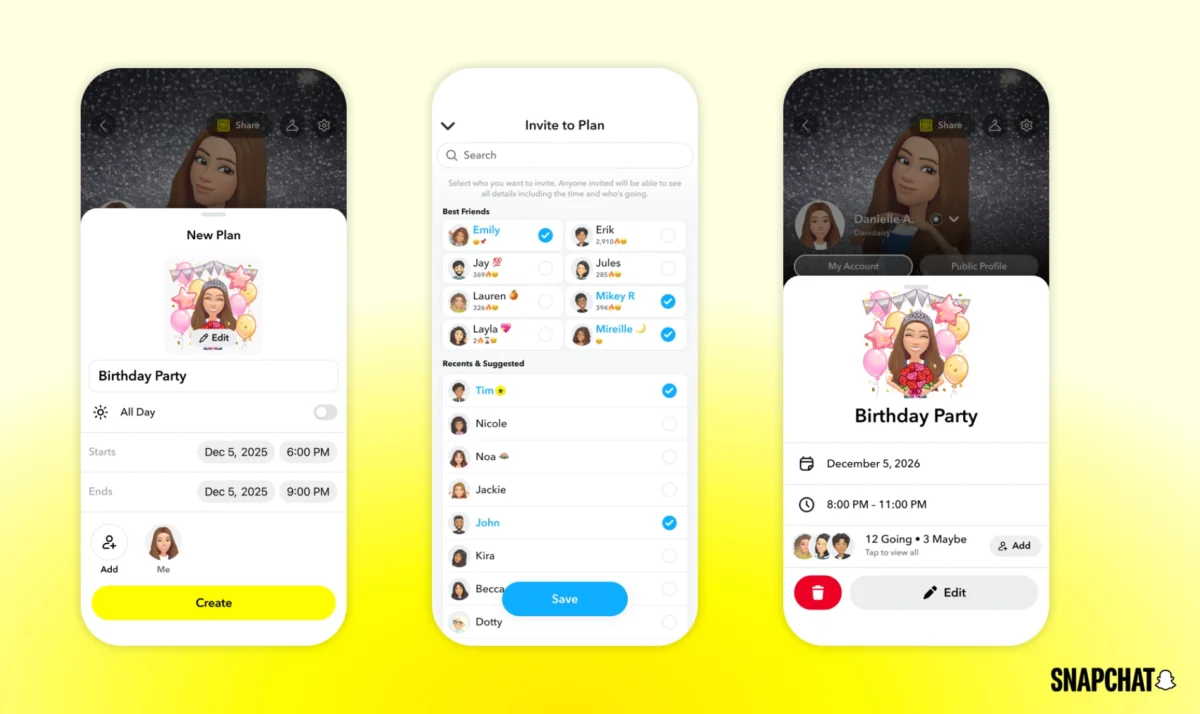
In an era defined by digital isolation and the much-discussed "homebody economy," Snapchat is making a bold play to bring its massive user base back into the physical world. While countless think pieces have dissected the tendency of Gen Z to favor the comfort of their living rooms over the unpredictability of a night out, Snapchat has identified a different trend: the desire for connection is still there; it’s the friction of coordination that is failing.
With the launch of "Snapchat Plans," the social giant is pivoting from being a platform for ephemeral content to an essential utility for real-world social orchestration. By integrating event management directly into the user experience, Snapchat is positioning itself as a central hub for social logistics, effectively challenging dedicated event-management apps like Eventbrite and Partyful.
The Evolution of Digital Coordination
Snapchat Plans is not merely an update; it is a fundamental shift in how the platform views its role in the user journey. Historically, Snapchat has served as a bridge between a notification and a conversation. Now, it aims to be the bridge between a conversation and a physical meetup.
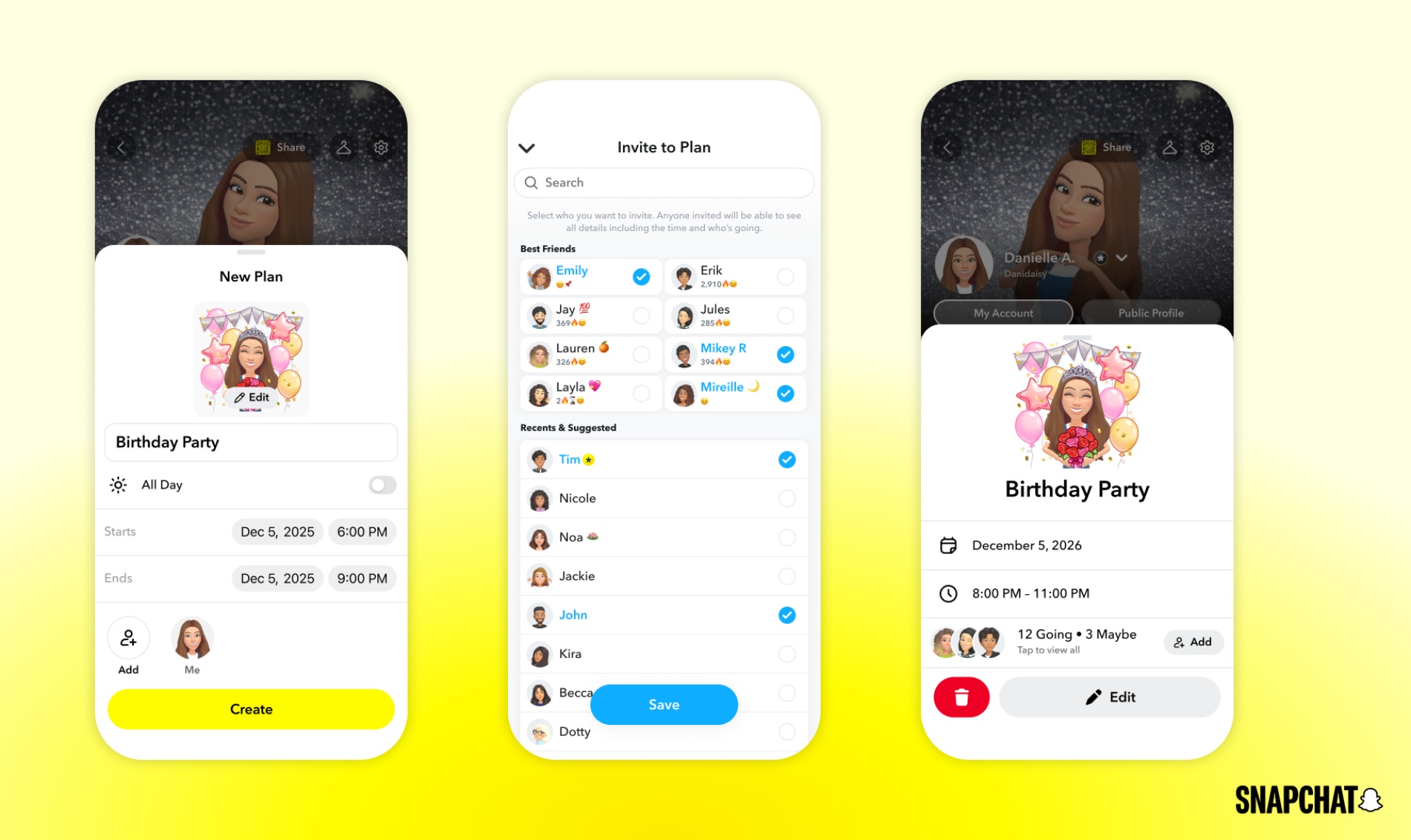
The feature operates as an all-in-one toolkit, functioning as a digital invitation suite, a real-time attendance tracker, and a central planning dashboard. For a demographic that is increasingly overwhelmed by fragmented communication—where invitations are lost in the noise of group chats and important details are buried under a mountain of memes—Snapchat Plans offers a streamlined, centralized alternative.
Users can invite up to 200 friends to a single plan, providing a robust capacity that serves everything from intimate dinners to larger social gatherings. Once a plan is created, it gains dedicated real estate on the user’s profile, acting as a persistent reminder of upcoming events. Customization is, of course, central to the Snapchat identity, and users can personalize their invites with Bitmojis, ensuring that the formality of an event doesn’t strip away the platform’s signature playfulness.
Chronology: The Road to ‘Plans’
The development of Snapchat Plans follows a long-standing pattern of platform evolution where social apps begin by facilitating connection and end by facilitating commerce or activity.
- Early Phase (The Communication Utility): In its infancy, Snapchat focused exclusively on one-to-one ephemeral messaging. The introduction of Group Chats significantly increased user retention, as it turned the app into a primary communication channel for peer groups.
- Intermediate Phase (The Rise of Social Data): Internal metrics began to reveal a startling reality: 35% of U.S. users aged 13 to 24 were already utilizing Snapchat’s group chat functionality to coordinate real-world events. This organic usage provided the blueprint for the current iteration of Plans.
- The Development Sprint: Over the past 18 months, Snapchat’s product team shifted its focus toward "friction reduction." Recognizing that users were leaving the app to coordinate via third-party calendar apps or text threads, the company prioritized building an in-app solution that would keep users within the ecosystem.
- The Rollout: Announced in September 2026, the feature represents the culmination of this strategy, aiming to formalize the ad-hoc coordination that has long occurred on the platform.
Supporting Data: Why Now?
The timing of Snapchat’s move is backed by significant industry data regarding youth culture and social media usage. While the "homebody" narrative for Gen Z is prevalent—often fueled by rising inflation and the high cost of entertainment—social media data suggests that the demand for in-person experiences remains high.
According to internal Snapchat data, the vast majority of its core demographic uses the app as their primary means of social organization. This is a critical distinction. While Instagram has leaned into creator-driven content and TikTok has leaned into entertainment and commerce, Snapchat has remained the "digital living room."
When 35% of a platform’s most active demographic is already using it as a project management tool, the transition to an official feature is a logical evolution. By providing an "official" function for these plans, Snapchat is not trying to change user behavior; it is providing the infrastructure to support behavior that is already happening. This is a classic "feature-to-product" play, where the company captures value from an existing workflow rather than attempting to force a new one upon the user base.
The Competitive Landscape
Snapchat is not operating in a vacuum. The broader social media landscape is currently experiencing a "fragmentation of purpose."
- Instagram: Under Adam Mosseri’s leadership, the platform is doubling down on Direct Messages (DMs). Instagram has recognized that users are increasingly sharing content privately rather than publicly, and they are optimizing the DM experience to compete with private messaging apps.
- YouTube: The platform is moving into professionalization, helping creators manage business operations through tools like "The Brand Deal Desk," essentially turning the platform into a B2B service for creators.
- TikTok: The short-form giant is aggressive in its pursuit of the "social commerce" dollar, utilizing TikTok Shop and live-streamed events to monetize the user’s attention span in real-time.
Against this backdrop, Snapchat’s move into "Plans" is a defensive and offensive maneuver. By focusing on the logistics of social life, Snapchat is doubling down on its most powerful asset: the "social graph." While TikTok knows what you like to watch, Snapchat knows who you actually spend your time with. That is a unique, high-value data point that can be leveraged to ensure the app remains indispensable.
Official Responses and Strategic Vision
In a recent blog post, a Snapchat spokesperson emphasized the philosophy behind the feature: "Like conversations on Snapchat, Snapchat Plans are private and invite-only, giving friends a familiar and trusted place to coordinate the moments that matter most. No more missed get-togethers because of buried messages, lost details, or forgetting to create an invitation."
The emphasis on privacy is not incidental. As Gen Z grows increasingly wary of the "public square" nature of platforms like X or the curated pressure of Instagram, the private, ephemeral nature of Snapchat becomes its greatest competitive advantage. By keeping Plans within the invite-only ecosystem, the company is positioning itself as a safe, intimate space for coordination.
The company has also indicated that future updates will allow for the initiation of plans without ever leaving the chat window. This "deep integration" strategy is intended to eliminate the "app-switching fatigue" that often causes users to abandon their plans.
Implications: The "Touch Grass" Movement
The implications of this update are two-fold: for the user and for the platform.
For the user, the goal is simple: to make it easier to "touch grass." By gamifying the act of planning and providing a centralized space for coordination, Snapchat is attempting to solve the "analysis paralysis" that often kills social events. If the hurdle to organizing a night out is reduced from a series of stressful, unorganized texts to a single, intuitive interface, the frequency of real-world meetups is likely to increase.
For the platform, the implications are profound. If Snapchat can successfully integrate itself into the real-world scheduling of its users, it increases its "stickiness" exponentially. If a user’s calendar for the week lives on Snapchat, the app moves from a peripheral communication tool to a central life-management utility. This, in turn, provides the company with even richer data on user intent—what they are doing, where they are going, and who they are going with—which is invaluable for future advertising and partnership opportunities.
Furthermore, this move may signal a broader trend in the social media industry: the retreat from the "Global Village" toward the "Digital Enclave." As users grow tired of the toxicity of global feeds, they are retreating into smaller, more meaningful circles. Snapchat Plans is essentially the first major infrastructure project designed to support this retreat, providing the tools for these small, private groups to interact with the physical world.
Conclusion: A New Chapter for Social Media
Snapchat’s introduction of "Plans" is a reminder that the most successful social features are often those that solve a tangible, everyday problem rather than those that simply offer a new way to consume content.
Whether this feature will successfully reverse the "homebody" trend among Gen Z remains to be seen. However, by acknowledging that social media has a responsibility to facilitate, rather than just consume, real-world connection, Snapchat is staking its claim to the future of social interaction. In a world that is increasingly digital, the ability to effectively plan and execute a physical gathering is becoming a new kind of social currency—and Snapchat is betting that it can be the mint for that currency.
As the rollout continues, the focus will shift to how users adopt these tools. Will we see a resurgence in small-group gatherings facilitated by the app? Will the "dedicated real estate" on user profiles lead to a new culture of social transparency among friends? These are the questions that will define the next chapter of Snapchat’s history. For now, the message is clear: if you are looking to get out of the house, Snapchat is ready to help you make it happen.

