

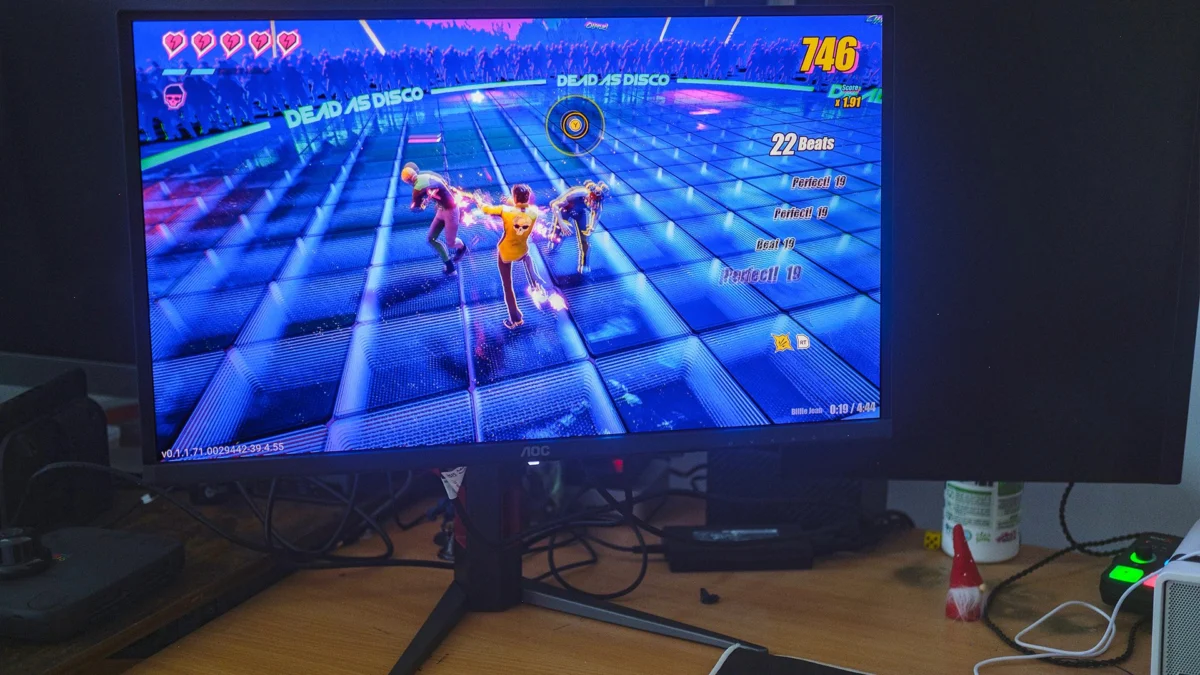
The landscape of PC gaming hardware is undergoing a seismic shift. For years, Organic Light Emitting Diode (OLED) technology was reserved for the ultra-premium tier of the market—enthusiasts willing to spend upwards of $1,000 for the perfect contrast ratios and instantaneous response times. However, as we move through the mid-2020s, a new wave of "value-oriented" OLEDs is emerging. Leading this charge is the AOC GAMING Q27G4ZD, a 27-inch QD-OLED monitor that seeks to balance high-end visual fidelity with a more accessible $600 price tag.
In a comprehensive review of the unit, it becomes clear that while AOC has maintained its reputation for budget-conscious engineering, the integration of Quantum Dot OLED (QD-OLED) technology elevates this panel into a new category of performance. This report analyzes the technical specifications, real-world gaming performance, and market implications of AOC’s latest "quiet soldier" in the display wars.
Main Facts: The Technical Profile of the Q27G4ZD
The AOC GAMING Q27G4ZD enters the market with a formidable spec sheet that targets the "sweet spot" of modern gaming: 1440p resolution at a blistering 240Hz refresh rate. By utilizing a QD-OLED panel, the monitor promises the deep, "true" blacks of traditional OLEDs combined with the enhanced color vibrancy and brightness potential afforded by Quantum Dot technology.
Key Specifications at a Glance:
- Panel Type: QD-OLED (Quantum Dot Organic Light Emitting Diode)
- Resolution: 2560 x 1440 (QHD)
- Refresh Rate: 240Hz
- Price Point: Approximately $600
- Peak Brightness: 400 nits (HDR)
- Connectivity: 4x USB-A ports (via USB-B upstream), DisplayPort, and HDMI.
- Ergonomics: 90-degree swivel (TATE mode support), height adjustment, and tilt.
The $600 price point is perhaps the most significant "fact" regarding this device. It positions the Q27G4ZD significantly lower than flagship offerings from competitors like LG or Samsung, yet it retains the core technology that makes OLED superior to traditional IPS or VA panels: per-pixel dimming and near-zero motion blur.
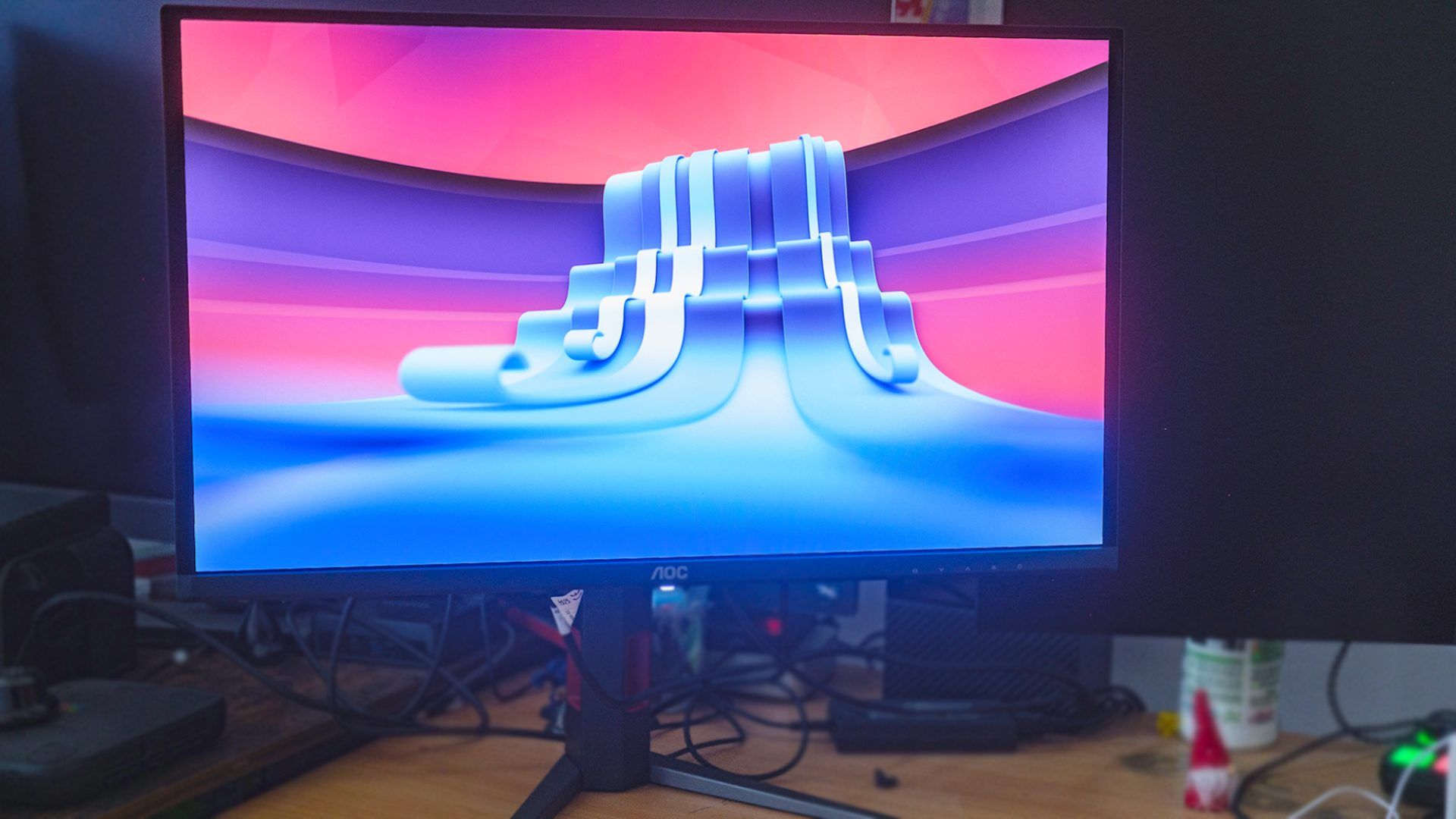
Chronology: From Unboxing to Long-Term Testing
The journey of testing the AOC Q27G4ZD reveals a narrative of high-performance internals housed in a somewhat utilitarian exterior. The testing process spanned several weeks, involving a variety of operating systems and gaming genres to stress-test the panel’s versatility.
The Setup and Build Quality
Upon initial assembly, the monitor’s budget origins are occasionally apparent. Testers noted that the decorative ring on the rear of the chassis felt somewhat flimsy, even falling off during the connection to the base. The aesthetic is "harshly angled," a signature of the AOC GAMING line, but the materials lack the premium heft found in the Agon Pro series. Furthermore, a subtle electronic "whining" noise was detected during operation—a common issue in high-refresh-rate monitors, though one that is easily masked by game audio or headphones.
The Gaming Odyssey: Pragmata and Beyond
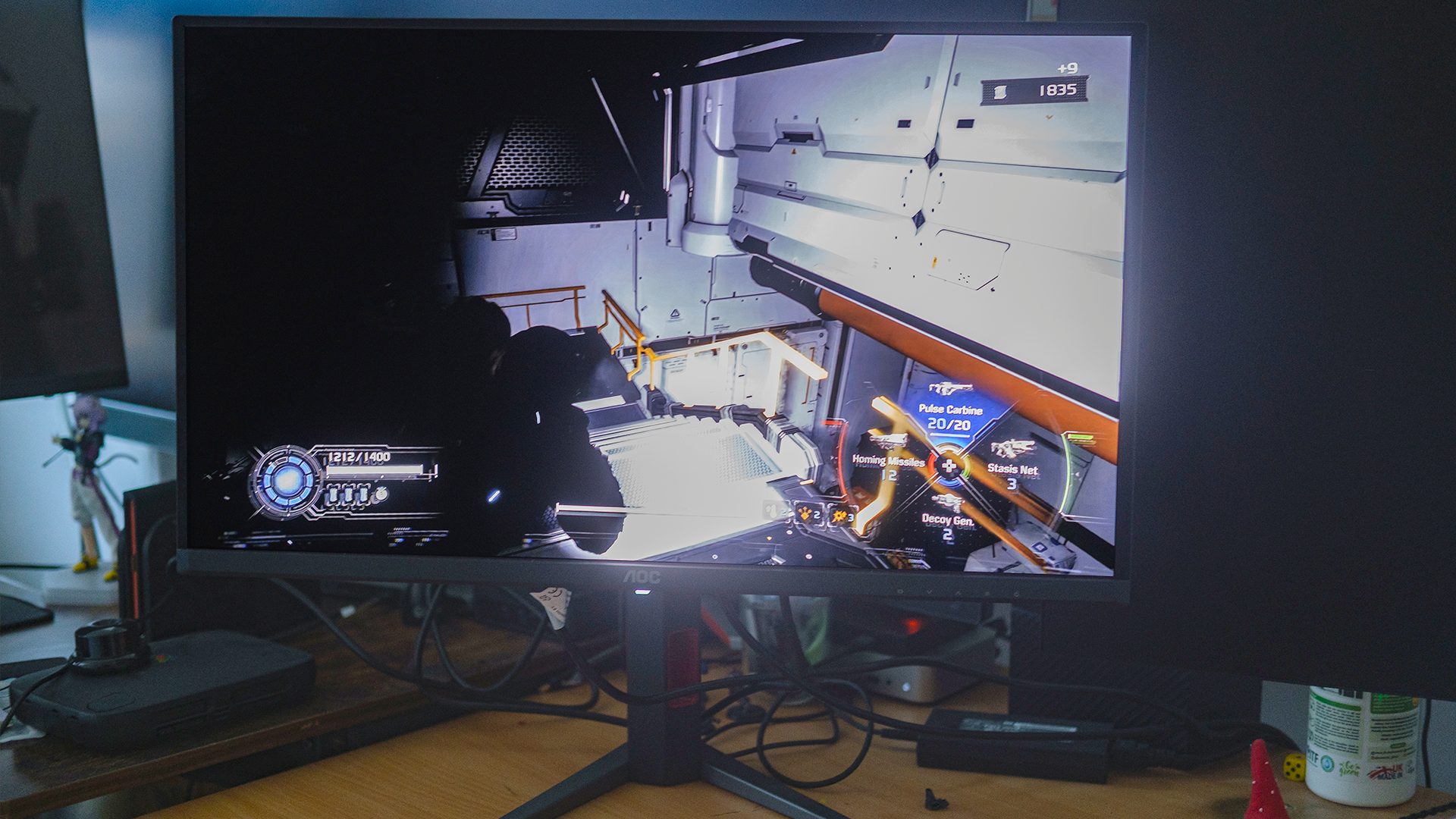
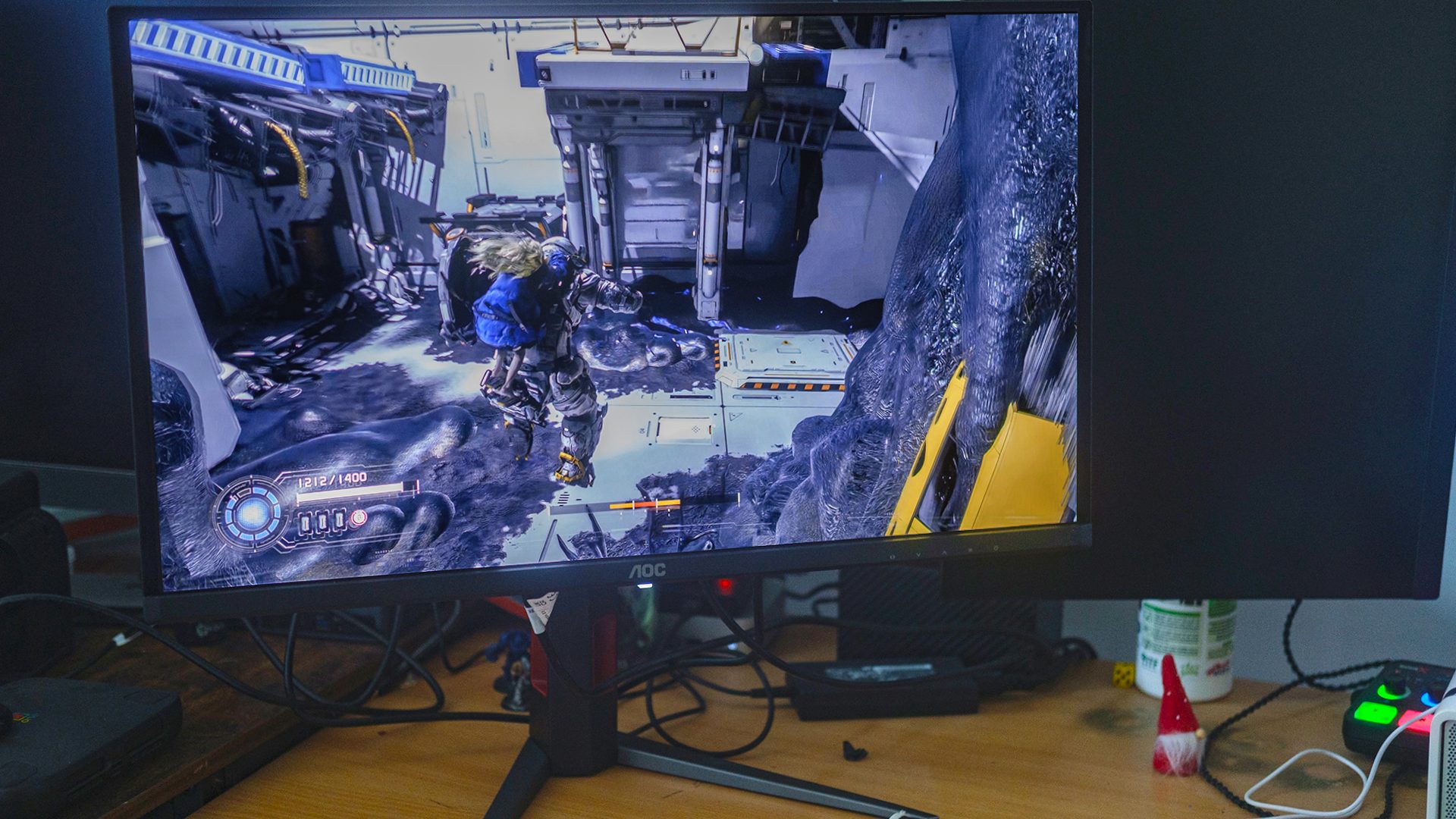
The centerpiece of the performance evaluation was a full playthrough of Pragmata. The game’s clinical, sci-fi aesthetic served as the perfect canvas for the QD-OLED panel. Even without High Dynamic Range (HDR) fully engaged during certain Linux-based testing phases, the panel’s native contrast allowed for vivid colors and deep shadows that enhanced the atmosphere of the title.
The testing then moved into the realm of high-speed competition and retro gaming:
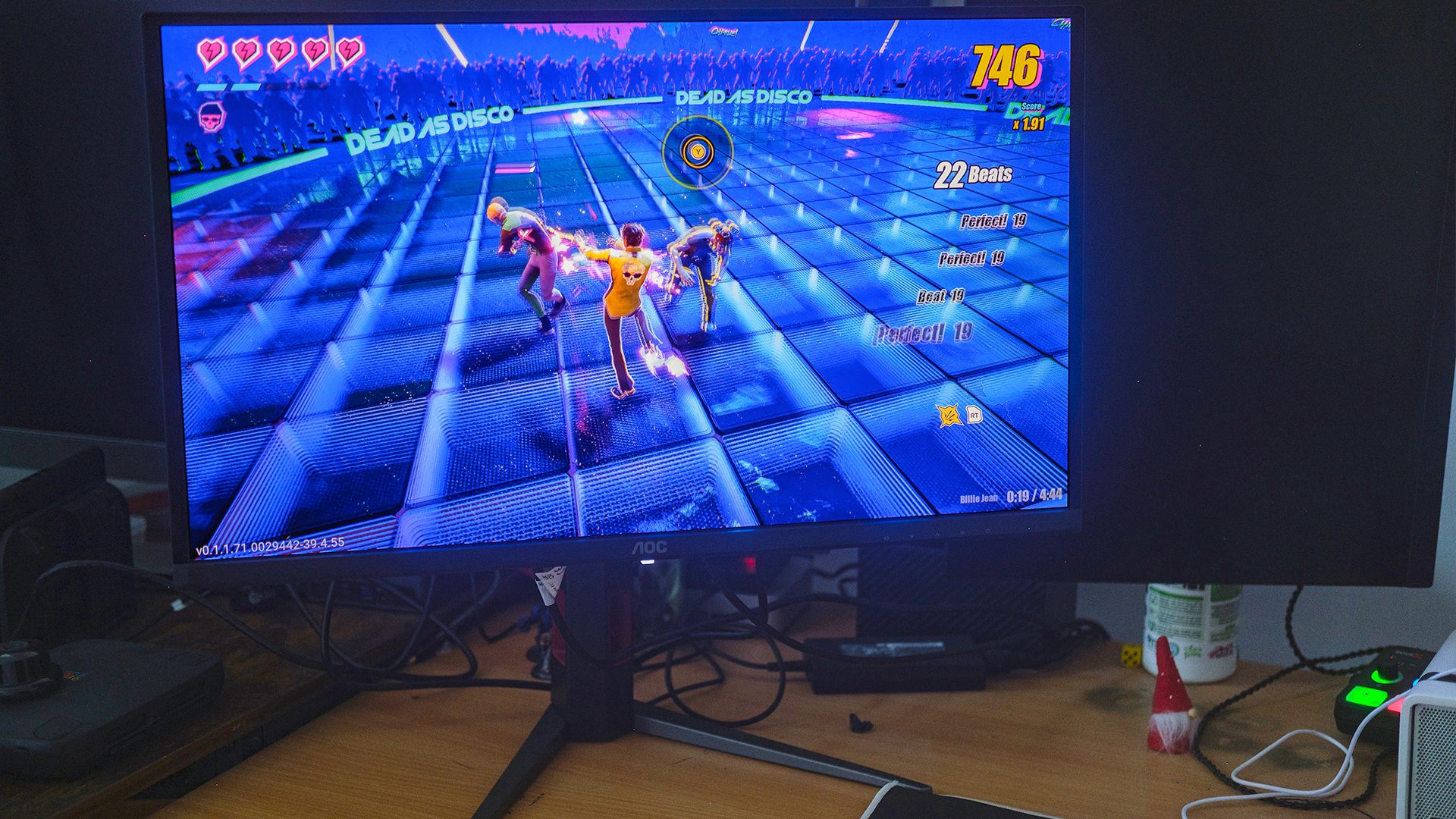
- Esports Testing: Titles like TerraTech Legion and Tetris: The Grandmaster 4 were used to verify the 240Hz claim. The monitor showed no perceptible latency or ghosting, maintaining clarity during rapid on-screen movement.
- Retro Gaming: Utilizing the MiSTer FPGA and SuperStation One, the monitor was tested for its handling of lower resolutions. Despite the lack of Black Frame Insertion (BFI)—a feature often used to mimic CRT motion—games like Earthbound and Mother 3 benefited immensely from the QD-OLED’s color saturation.
- Productivity and Workflows: The final stage of testing involved video editing and office work. Here, the monitor’s limitations began to surface, particularly regarding brightness levels and color grading accuracy.
Supporting Data: Performance Metrics and Feature Analysis
To understand where the AOC Q27G4ZD sits in the current market, one must look at the data regarding its brightness and software features.
Brightness and HDR Limitations
While the monitor is rated for HDR, its peak brightness of 400 nits is a point of contention for professional users. In the world of HDR color grading, a minimum of 1,000 nits is generally considered the industry standard for "true" HDR representation.
- 400 Nits: Sufficient for casual gaming in a controlled lighting environment.
- 1,000 Nits: Required for professional-grade HDR mastering.
Data from the review suggests that while the monitor is a "serviceable" HDR performer for gaming, it is not recommended for professional video editors. Test clips recorded and edited on the Q27G4ZD appeared "off-base" when viewed on more color-accurate, brighter displays.
The "Nagging" Maintenance Software
OLED technology requires preventative maintenance to avoid "burn-in"—permanent image retention. AOC has implemented a pixel refresh reminder that appears every four hours of use. While necessary for the longevity of the panel, the implementation was described as "irritating," frequently interrupting gaming sessions with a mandatory warning. This software behavior is a significant data point for users who engage in long, uninterrupted play sessions.
Connectivity and Ergonomics
The inclusion of a 4-port USB-A hub is a welcome feature, though the choice of a USB-B upstream port rather than USB-C reflects AOC’s cost-cutting measures. However, the stand’s 90-degree swivel—allowing for vertical "TATE mode"—is a standout feature for enthusiasts of vertical shooters (shmups) and retro arcade ports.
Official Responses and Industry Positioning
While AOC has not issued a formal rebuttal to specific criticisms regarding the Q27G4ZD’s build quality or software "nagging," their market positioning speaks volumes. AOC has traditionally been the "people’s brand," focusing on high-spec panels with stripped-back chassis to keep costs down.
The "Budget OLED" Strategy
Industry analysts suggest that AOC’s move into the $600 QD-OLED space is a direct response to the maturing of OLED manufacturing. As yields at Samsung Display (the primary manufacturer of QD-OLED panels) have improved, AOC has been able to source these high-end components for their more affordable "G4" line.
Manufacturer Guidance on OLED Care
AOC’s aggressive pixel refresh reminders, while annoying to users, align with the industry-wide caution regarding OLED longevity. Most manufacturers, including Dell (Alienware) and LG, have similar protocols, though some have managed to make them less intrusive by running the refresh cycles automatically during standby mode rather than via mid-session pop-ups.
Implications: What the Q27G4ZD Means for the Future of Gaming
The arrival of a competent $600 QD-OLED monitor has several long-term implications for the hardware industry and the average consumer.
1. The End of the IPS Reign?
For the better part of a decade, IPS (In-Plane Switching) panels have been the gold standard for gaming due to their color accuracy and viewing angles. However, with OLED prices dropping into the $500–$700 range, the main advantage of IPS—affordability—is eroding. The Q27G4ZD proves that a gamer can now get superior contrast and response times without doubling their budget.
2. The "Quiet Soldier" Philosophy
The review characterizes the Q27G4ZD as a "quiet soldier"—a device that does its job without unnecessary "frills" like RGB lighting or fake on-screen reticles. This suggests a shift in consumer preference. Gamers are becoming more savvy; they are increasingly willing to trade "gamer-aesthetic" features for raw panel performance.
3. Linux and Open-Source Compatibility
The tester’s experience with CachyOS (a Linux distribution) highlights an ongoing challenge: HDR implementation in non-Windows environments. As more gamers migrate to Linux-based systems (partly due to the success of the Steam Deck), the pressure on monitor manufacturers to provide better firmware-level communication for HDR on Linux will grow.
4. Market Pressure on Premium Brands
If AOC can deliver a 240Hz QD-OLED experience for $600, premium brands like Asus (ROG) and BenQ (Mobiuz) will find it harder to justify $1,000+ price tags for similar specs. This competition is likely to drive further innovation in the high-end—such as higher brightness levels (1,500+ nits) and 480Hz refresh rates—to maintain a "premium" distinction.
Final Verdict
The AOC GAMING Q27G4ZD is a landmark product for the mid-range market. It is not perfect—the build quality feels light, the software is persistent, and the brightness isn’t quite there for professional work. However, as a portal into high-refresh-rate OLED gaming, it is an "unbeatable" value proposition. For the gamer who wants their clinical sci-fi worlds to pop and their competitive shooters to feel instantaneous, AOC has delivered a panel that finally brings the "upper echelon" of display tech to the masses.

