

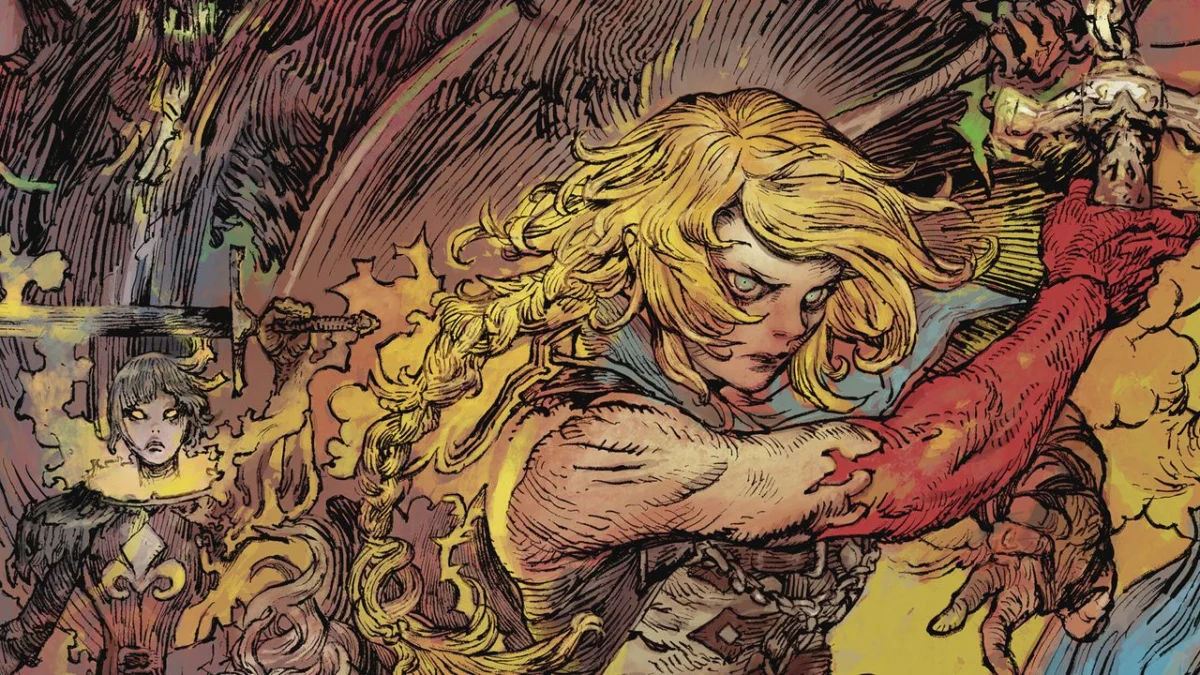
The video game industry is often driven by a paradoxical relationship between legacy and accessibility. Few franchises embody this tension more than Castlevania, a series so foundational that it lent half its name to an entire subgenre: the "Metroidvania." Yet, despite its legendary status, the franchise has spent the better part of the last decade in a state of hibernation, leaving a vacuum filled by indie darlings and high-production spiritual successors.
The upcoming release of Castlevania: Belmont’s Curse represents more than just a return to form; it is the culmination of a strategic effort by Konami to reclaim its throne. According to Tsutomu Taniguchi, the producer of the new title, the inspiration for the project did not come from internal corporate mandates, but from a startling revelation found in the comments sections of social media and gaming forums. Taniguchi discovered a generation of gamers who identified as die-hard "Metroidvania" fans but had never actually played a Castlevania game.
Main Facts: The Catalyst for a Gothic Revival
The development of Castlevania: Belmont’s Curse is rooted in an observation of modern gaming culture. Tsutomu Taniguchi, speaking in a comprehensive interview with Famitsu, revealed that his motivation to pitch a new entry in the series was sparked by the realization that Castlevania’s brand recognition had decoupled from its gameplay experience.
"I was a fan of Castlevania long before I started on this project," Taniguchi explained. "Since joining Konami, I kept seeing people on social media and in fandoms saying that they love Metroidvanias but they’ve never played a Castlevania game."
This disconnect was further exacerbated by the massive success of the Castlevania animated series on Netflix. While the show introduced millions to the lore of Trevor Belmont, Sypha Belnades, and Alucard, it did not necessarily translate into players picking up a controller. For many younger fans, Castlevania was a "vibe" or a "show," rather than a tangible gaming experience. Taniguchi’s goal with Belmont’s Curse is to bridge this gap, offering a modern entry point that honors the series’ punishing roots while catering to the sensibilities of a contemporary audience.
Chronology: A Decade of Silence and the Path to Re-emergence
To understand the significance of Belmont’s Curse, one must look at the long road the franchise has traveled—or rather, the long pause it endured.
The Great Hiatus (2014–2018)
Following the release of Castlevania: Lords of Shadow 2 in 2014, the franchise entered a period of dormancy. During this time, Konami shifted its focus toward mobile gaming and pachinko machines, leading many to fear that the Belmont lineage had been permanently retired. Meanwhile, the "Metroidvania" genre flourished in the indie scene, with titles like Hollow Knight, Axiom Verge, and Ori and the Blind Forest refining the formula that Konami had helped pioneer.
The Collection Phase (2019–2024)
Taniguchi and his team recognized that before a new game could succeed, the backlog of classic titles needed to be accessible. This led to a phased rollout of legacy collections:
- 2019: Castlevania Anniversary Collection: Focused on the 8-bit and 16-bit era, including the original NES titles and Bloodlines.
- 2021: Castlevania Advance Collection: Brought the beloved Game Boy Advance titles, such as Aria of Sorrow, to modern platforms.
- 2024: Castlevania Dominus Collection: The most recent effort, porting the dual-screen Nintendo DS titles (Dawn of Sorrow, Portrait of Ruin, and Order of Ecclesia) to home consoles and PC.
The Collaboration Strategy (2023)
Before committing to a full-scale new entry, Konami tested the waters through high-profile collaborations. The most notable was the Dead Cells: Return to Castlevania DLC in 2023. This expansion acted as a "proof of concept," showing that there was still a massive appetite for the aesthetic and mechanics of the series.
The Proposal of Belmont’s Curse
With the collections selling well and the Dead Cells collaboration receiving critical acclaim, Taniguchi felt the timing was right. He proposed Belmont’s Curse as the definitive answer to the "missing link" in the modern Metroidvania landscape.
Supporting Data: The Rise of the "Metroidvania" Without the "Castlevania"
The data supporting Taniguchi’s observation is reflected in the market trends of the last ten years. The "Metroidvania" tag on Steam is one of the most popular and saturated categories. However, until the recent collections, very few of the top-selling games in that category were actually from the Castlevania franchise.
According to industry analysts, the "Metroidvania" genre saw a 300% increase in indie releases between 2015 and 2023. Games like Hollow Knight have sold over 3 million copies, creating a massive player base that understands the mechanics of exploration, ability-gating, and backtracking. Yet, because the "foundational" Castlevania games—specifically Symphony of the Night—were largely trapped on older hardware (like the PlayStation 1 or the PSP), a "knowledge gap" formed.
Furthermore, search engine data reveals that interest in "Castlevania" peaked during the release of the Netflix series seasons, but "Castlevania gameplay" searches did not see a proportional spike until the release of the Advance Collection. This confirmed Taniguchi’s fear: the brand was famous, but the games were becoming "digital myths" rather than active experiences.
Official Responses: Konami’s Internal Shift
The shift in Konami’s strategy, as voiced by Taniguchi, suggests a renewed respect for internal development and fan feedback. For years, Konami was criticized for its perceived abandonment of its core gaming IPs. The recent revitalization of Silent Hill and Metal Gear Solid indicates a company-wide pivot.
In his interview with Famitsu, Taniguchi was candid about his dual role as an employee and a fan. "I started to think about what I could do about this as both a Konami employee and a fan," he stated. This "fan-first" approach is a departure from the more clinical, profit-driven decisions of the mid-2010s.
Taniguchi also addressed the "elephant in the room": the absence of Symphony of the Night (SotN) in recent multi-platform collections. While SotN is available on PS4 and mobile via the Requiem bundle, its exclusion from the Dominus and Advance collections on other platforms remains a point of contention. Taniguchi’s comments imply that while the collections were a necessary first step to educate the public, the true path forward lies in "something new"—hence the birth of Belmont’s Curse.
Implications: The Future of the Vampire Hunters
The development of Castlevania: Belmont’s Curse carries significant implications for the gaming industry and the future of legacy franchises.
1. The "Re-Education" of the Player Base
If Belmont’s Curse succeeds, it will prove that legacy IPs can reclaim genres they once dominated. By acknowledging that many fans have only seen the anime or played indie clones, Konami is positioning Belmont’s Curse as both a fresh start and a history lesson. It challenges the notion that a series must reinvent itself entirely (like the 3D Lords of Shadow reboot) to remain relevant.
2. The Standard for Modern Retro
The success of the Dead Cells DLC showed that modern players appreciate the "stiff" but precise combat of classic Castlevania. Belmont’s Curse is expected to balance this traditional feel with modern "quality of life" features, potentially setting a new standard for how classic franchises should handle their "return to 2D."
3. Konami’s Redemption Arc
For Konami, Belmont’s Curse is a litmus test. It is one of the first major "new" titles in their core franchises that isn’t a remake or a collection. If Taniguchi can deliver a game that satisfies both the "old guard" who played Rondo of Blood in the 90s and the "new guard" who discovered the genre through Hollow Knight, it will signal a full-scale revival of Konami as a creative powerhouse.
4. Genre Evolution
The "Metroidvania" genre has evolved significantly in the absence of its namesake. Indies have introduced "Souls-like" mechanics, procedural generation, and complex narrative structures. Belmont’s Curse will have to contend with these innovations. Will it stick to the gothic, linear-branching paths of the past, or will it incorporate the lessons learned from the indie revolution?
Conclusion
Tsutomu Taniguchi’s revelation is a reminder that in the digital age, history is easily forgotten if it isn’t made accessible. By listening to the "swine"—the self-deprecating term used by some fans who admit to never playing the originals—Taniguchi has identified a unique opportunity. Castlevania: Belmont’s Curse is not just a game; it is a bridge across a twelve-year chasm, designed to remind the world why the "vania" in Metroidvania exists in the first place. As the Belmont family prepares to take up the whip once more, the gaming world watches to see if this new curse will be a blessing for the franchise’s future.

