

Published December 20, 2021
In the crowded landscape of independent gaming, few titles manage to strike the delicate balance between atmospheric storytelling and intuitive platforming. Scarf, a meditative adventure title, enters this arena with a clear lineage, drawing inspiration from genre-defining classics like Journey while carving out a distinct identity through its unique central mechanic: a polymorphic, sentient piece of fabric. More than just a platformer, Scarf is a poignant exploration of connection, ecological responsibility, and the nature of freedom.
The Core Premise: A Bond Forged in Fabric
At its heart, Scarf presents a deceptively simple narrative. The player assumes the role of a nameless nomad wandering through an ancient, fragmented world. Unlike the solitary trek seen in its predecessors, the player is accompanied by a dragon-shaped scarf—a sentient, magical entity that has been cruelly torn from its mother.
The objective is clear: the nomad and their scarf must traverse diverse, sprawling landscapes to recover scattered fragments of a portal. Once restored, this portal acts as a bridge, allowing the two companions to reunite the scarf with its parent. It is a premise steeped in sentimentality, serving as the emotional anchor for a game that prefers to show rather than tell, allowing the bond between the player and their companion to develop organically through gameplay rather than lengthy expository dialogue.
Chronology of the Experience: A Guided Path
The game’s progression follows a rhythmic, almost cyclical structure, designed to immerse the player in its contemplative atmosphere:

- The Awakening: The player begins in a tutorialized environment, learning the basic mechanics of movement and the initial bond with the scarf.
- The Expansion: As the nomad ventures into the primary biomes—ranging from lush, verdant forests to desolate, wind-swept deserts—the scarf begins to unlock new, transformative abilities.
- The Mid-Game Complexity: The narrative begins to layer in "lore fragments," presented as neolithic-style cave art. Players must begin to connect these visual stories to understand the world’s history.
- The Climax: The final act reveals the true nature of the world’s decay, leading to an emotional confrontation with the themes of ecological stewardship and the cost of human progress.
- The Resolution: The game concludes with a narrative pivot that reframes the entire journey, leaving the player to reflect on the moral ambiguity of their actions.
Supporting Data: Visuals, Sound, and Mechanics
Scarf succeeds largely because of its polished execution in sensory design.
Visual Identity
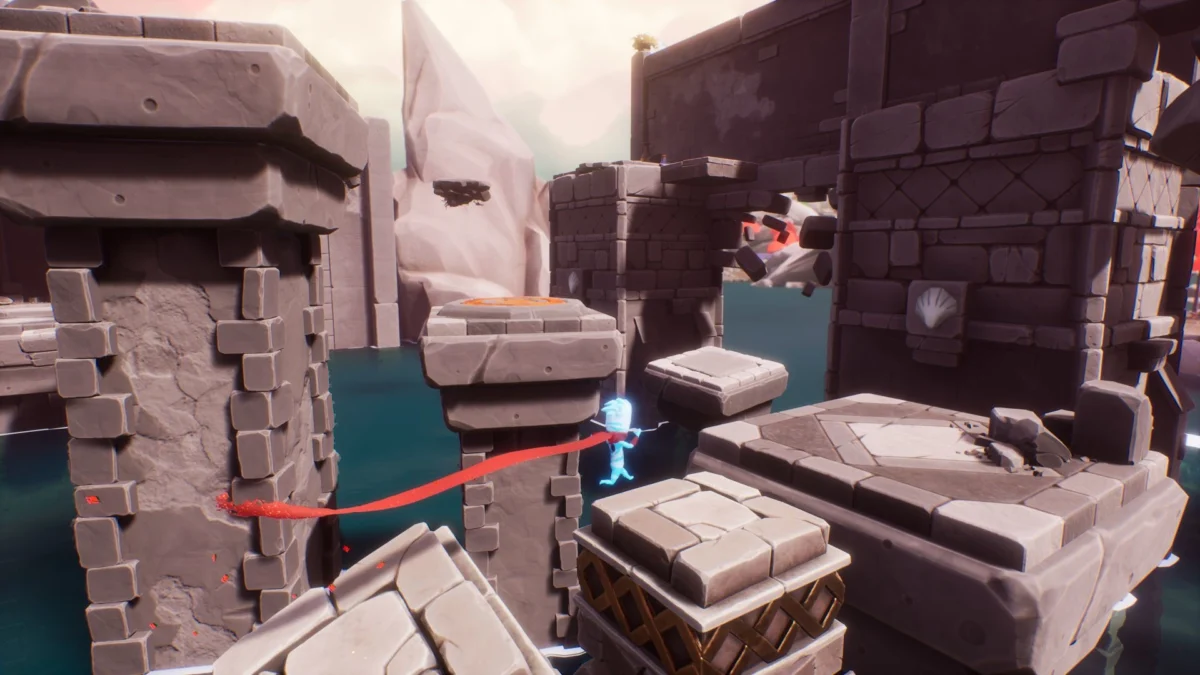
The game utilizes a "matte vibrancy," a color palette that feels like a living painting. It is an aesthetic choice that avoids the visual fatigue often associated with high-contrast games, ensuring that players can remain immersed for long sessions. The environments, while traditional in scope, are rendered with enough distinct personality that each biome feels like a separate, significant chapter in the nomad’s journey.
The Auditory Landscape
Complementing the visuals is an adaptive orchestral score. This music is dynamic, swelling to match the grandeur of open vistas or the tension of cavernous interiors, before fading into near-silence to allow the crisp, ambient sound design—the rustle of wind, the shifting of sand, and the chime of collecting objects—to take center stage.
Mechanics and Accessibility
From a mechanical standpoint, Scarf is designed for accessibility rather than technical mastery. The controls are smooth, and while the movement possesses a "floaty" quality, the platforming requirements are forgiving. Checkpoints are generous; missing a jump into a bottomless pit results in an immediate respawn at the previous ledge. This design philosophy intentionally removes the frustration of "fail-states," ensuring the focus remains on exploration and narrative progression.
The Scarf as a Character
Perhaps the most notable design choice in the game is the scarf itself. It is not merely a utility or a tool—though it does shift into various forms to help the player navigate obstacles—but an autonomous entity. It occasionally unwinds from the nomad’s neck to investigate the environment independently.

This independence serves a dual purpose: it emphasizes the scarf’s status as a living being and creates genuine vulnerability for the player. When the scarf is absent, the nomad is stripped of their abilities, making the player feel the tangible loss of their companion. This mechanical dependency forces the player to prioritize the welfare and presence of the scarf, solidifying the emotional stakes of the game.
Implications: A Critique of Collect-a-Thons
If Scarf has a point of friction, it lies in its reliance on the "collect-a-thon" structure. The game is dense with items: portal fragments, sigils, orbs, hidden paintings, and wood carvings. Often, the player’s progress is gated behind the necessity of collecting one item to unlock another, which can lead to a sense of repetition.
While this contributes to the game’s deliberate, slow-paced nature—a trait some players will find relaxing and others will find sluggish—it raises an important question regarding modern game design: does the inclusion of excessive collectibles enhance the world-building, or does it merely serve to pad the playtime? In Scarf, the answer is a bit of both. While the cutscenes hidden behind these collections are vital for understanding the game’s deep, sobering social commentary, the process of gathering them can sometimes detract from the narrative flow.
The Deeper Message: Ecology and Freedom
Beyond the platforming, Scarf functions as an allegory. The narrative turns in the latter half of the game are surprisingly ambitious. The "heel turn" in the story, which is better experienced than explained, transforms the game from a simple reunion quest into a critique of how civilizations exploit their environments for power. It challenges the player to consider the price of the "portal" they are building, moving the conversation from a simple quest to a meditation on freedom and ecological impact.
Conclusion: A Masterclass in Introspection
Scarf is not a game that seeks to challenge the player’s reflexes or push the boundaries of mechanical innovation. It is, instead, a game that asks the player to slow down. For veterans of the platforming genre, the puzzles may feel standard—weight switches and water physics are well-trodden ground—but to dismiss Scarf as "just another platformer" is to miss the point entirely.

The game is a short, heartfelt experience that can be completed in a single, focused sitting. Its strength lies not in its difficulty, but in its ability to foster an emotional connection between the player and the environment. By eschewing combat and violence, Scarf clears the stage for a more nuanced discussion about the world we inhabit and the companions we keep. It is a reminder that, sometimes, the most profound adventures are not the ones that demand the most skill, but the ones that demand the most empathy.
In an industry often obsessed with ever-increasing complexity, Scarf stands as a testament to the power of simplicity, suggesting that the most enduring stories are often the ones woven from the simplest of threads.

